Comparison
Rental Management Software vs a General CRM
A CRM is built around a person and a pipeline. A rental business is built around a physical unit that leaves the building and has to come back. That single difference is why rentals run in a CRM end up half-tracked in notes fields.
- CRM tracks contacts and deals; rentals track units and dates
- Deposits, condition grades and returns have no CRM equivalent
- Utilisation per instrument is the number that decides restocking
- Contracts belong to a serial, not to a note on an account
- Overdue chasing needs a live list, not a saved filter
What a CRM does well
Pipelines, follow-ups, email history and marketing segments. If your problem is winning customers, a CRM is the right tool.
What breaks when rentals live there
The instrument itself has no record, so its history — hires, damage, servicing, current holder — is scattered across notes on different contacts.
- Two customers appear to have the same instrument
- Deposit amounts held nowhere auditable
- Return condition disputed with no evidence
- No way to see which stock actually earns its keep
What rental software adds
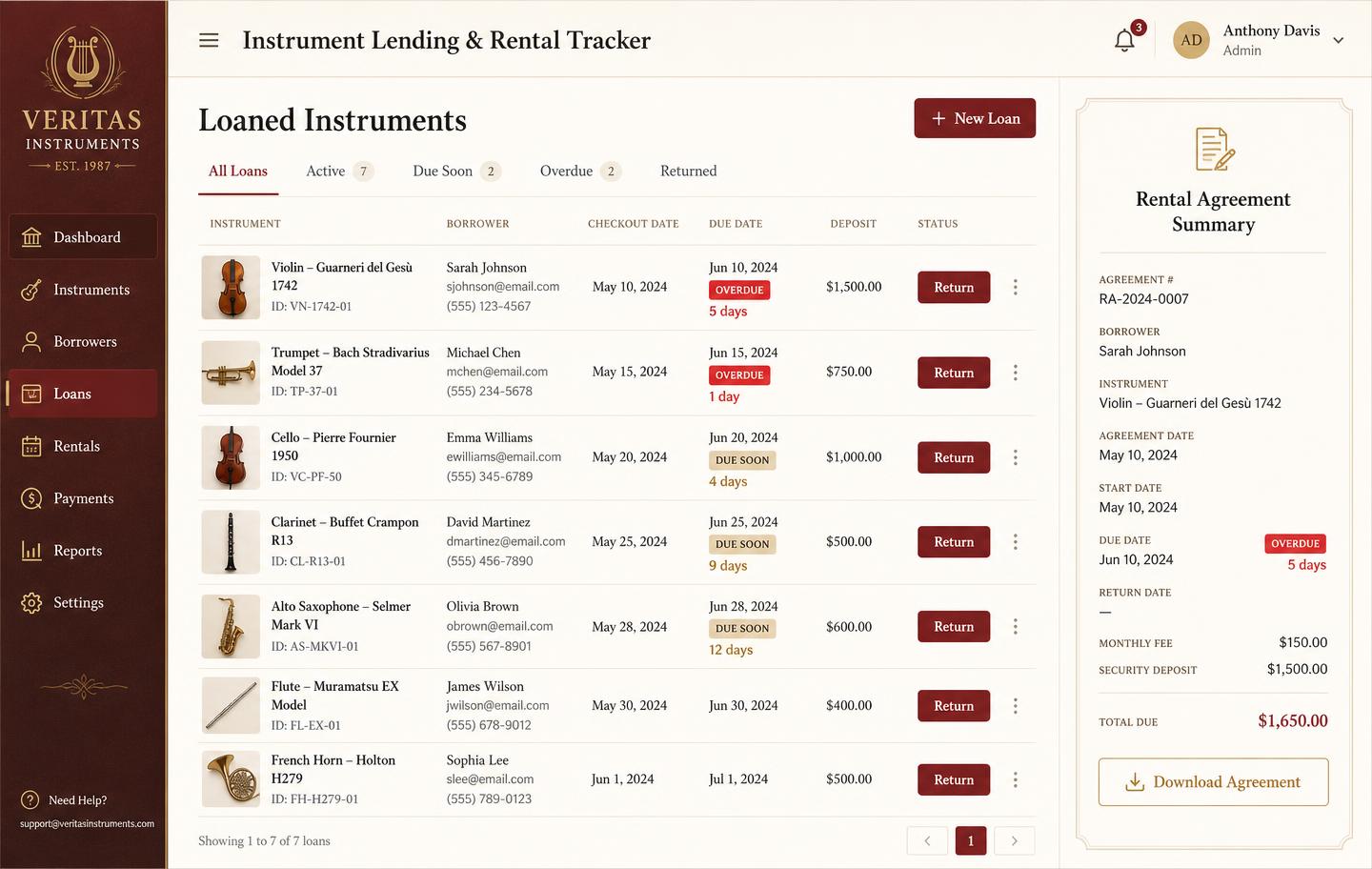
Every hire is a contract between a client and a serial number, with a due date, a deposit, condition at dispatch and return, and revenue attributed to the unit.
Both, without paying twice
Music Shop Suite includes client records and their instrument history, so most shops find they do not need a separate CRM at all — one flat $49/month covers rentals, repairs, lessons and stock.
See the workbench before you sign up
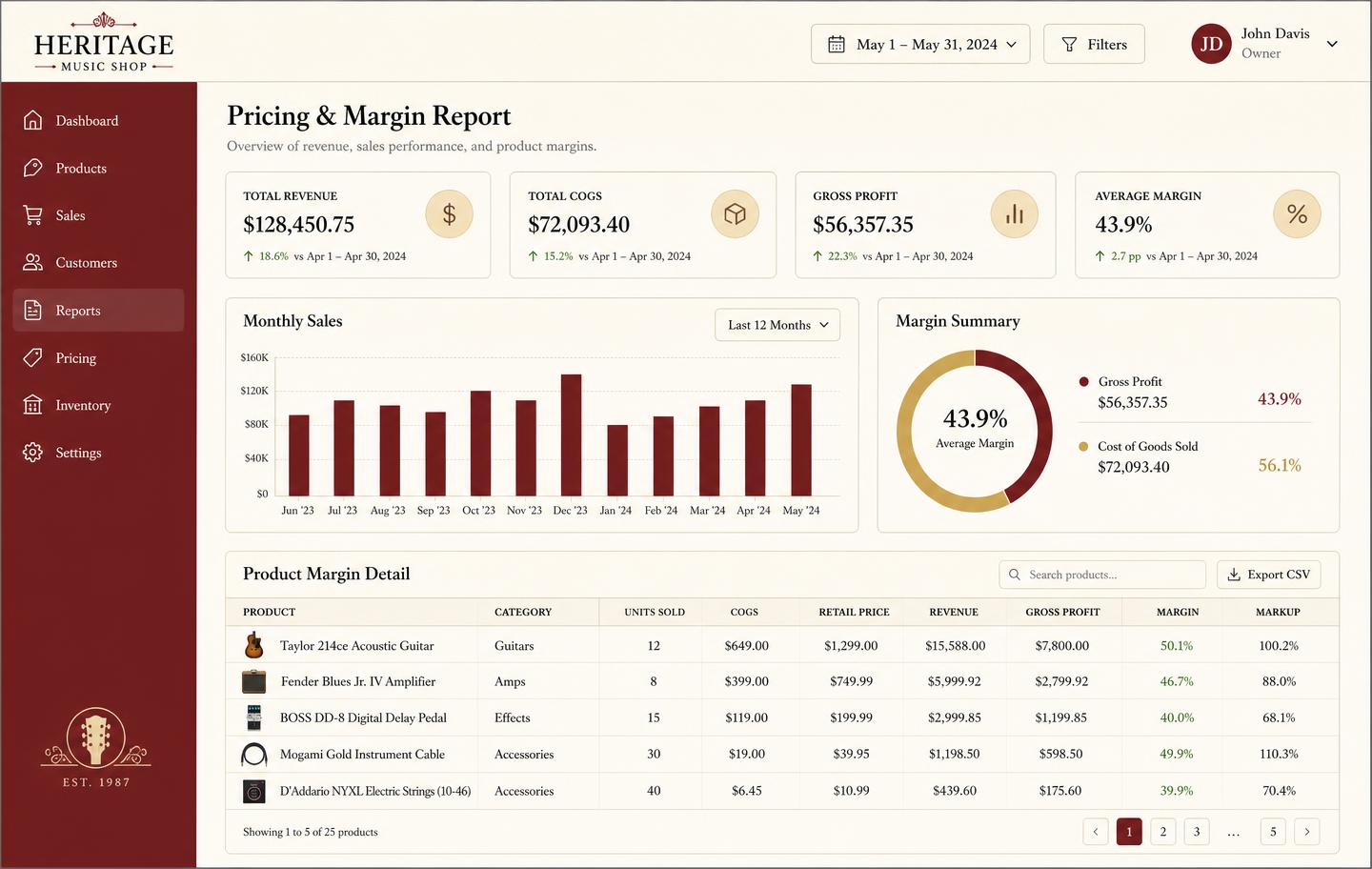
Inventory, pricing, lesson bookings, and instrument lending all live in the same back-office dashboard — no separate apps, no re-keying between them.
Frequently asked
- Can't I just run rentals from my CRM?
- A CRM tracks people and deals. Rentals need the unit: which serial went out, when it is due, what deposit is held, and what condition it returns in. Those are not CRM fields.
- Do I still need a CRM alongside this?
- Music Shop Suite holds client records, contact history and their instruments, which covers most independent shops. Keep a marketing CRM if you run campaigns from it.
- How are overdue rentals handled?
- Overdue units appear on a working list with the holder, the days late, and the contract, so chasing is a task rather than an archaeology project.
Keep exploring the workbench
Every part of the shop lives in one system. Follow the workflow closest to what you are trying to fix first.
- Best music store POS softwareHonest comparison of tills vs the back office.
- All solutionsEvery workflow Music Shop Suite covers.
- Best music store management softwareCompare connected back-office options for a small independent shop.
- Track instruments by serial numberBuild a reliable unit history from intake through sale or rental.
- Rental software buyer's guideEvaluate agreements, deposits, condition, payments, and fleet returns.
- Pricing — $49/monthOne plan, every module, no per-seat surprises.
Sign up today
Run your shop on one workbench — starting today.
$49/month, no contracts, no trial. Import your spreadsheet, invite your team, and have inventory, repairs, rentals, and lessons in one place tonight.