Buyer's guide
Best Inventory App for a Small Business: What Actually Matters
Most inventory apps assume interchangeable boxes on a shelf. If your stock has serial numbers, goes out on hire, comes in on consignment or passes through a workshop, the shortlist gets much shorter. Here is how to judge one.
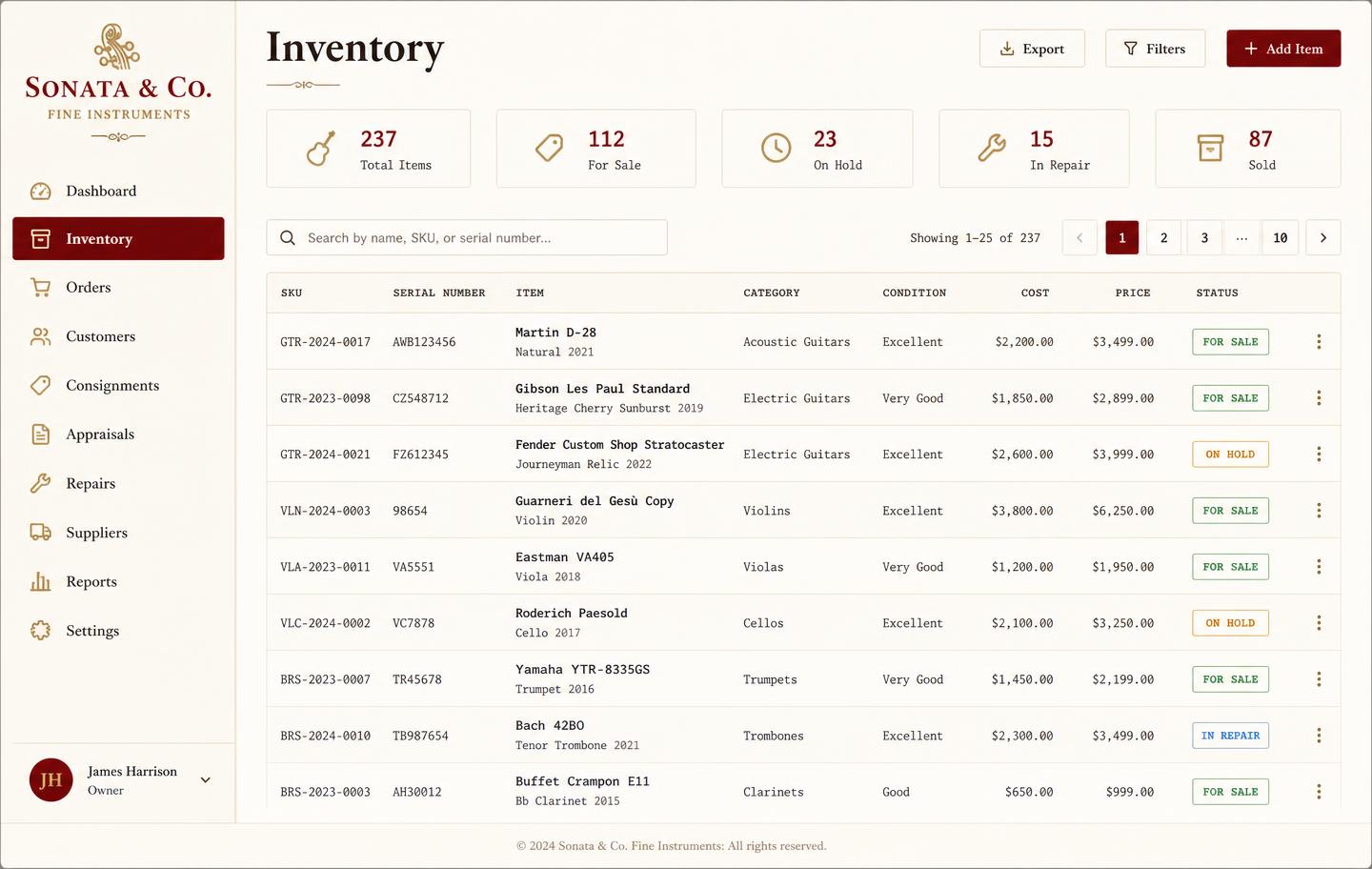
- Serial-level records, not just quantities per SKU
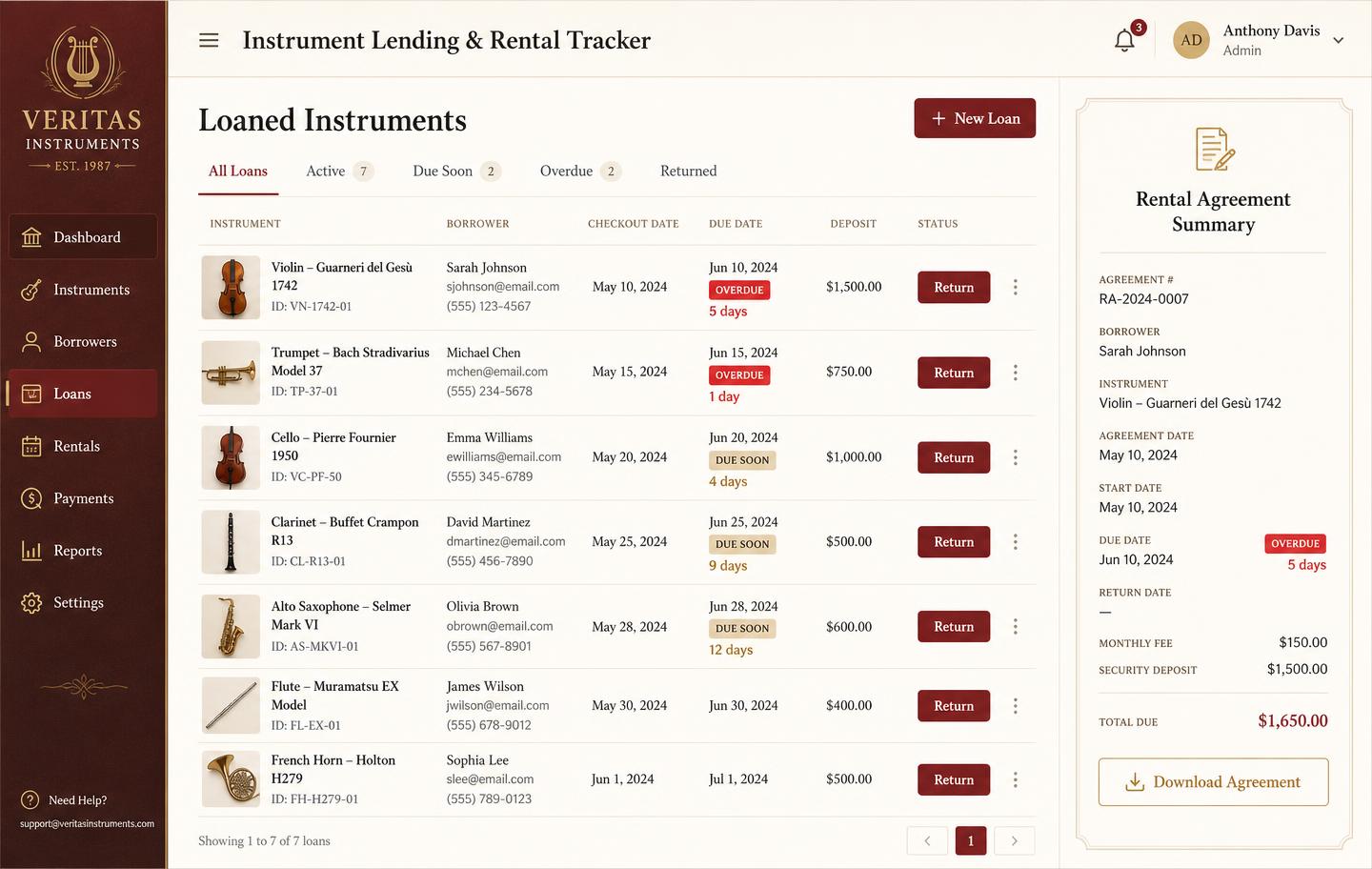
- A holder and due date for anything that leaves the building
- Costs after refurb included in the margin figure
- Audit trail of who changed what, and when
- Flat pricing that does not punish growth
Question one: is your stock identifiable?
If two units of the same model can have different conditions, histories and prices, you need one record per unit. Quantity-based apps will always disagree with your shelf.
Question two: does stock leave and come back?
Rentals, loans, approvals and consignment all need a holder, a due date and a condition at return. Very few general apps model any of that.
Question three: does the app know your real margin?
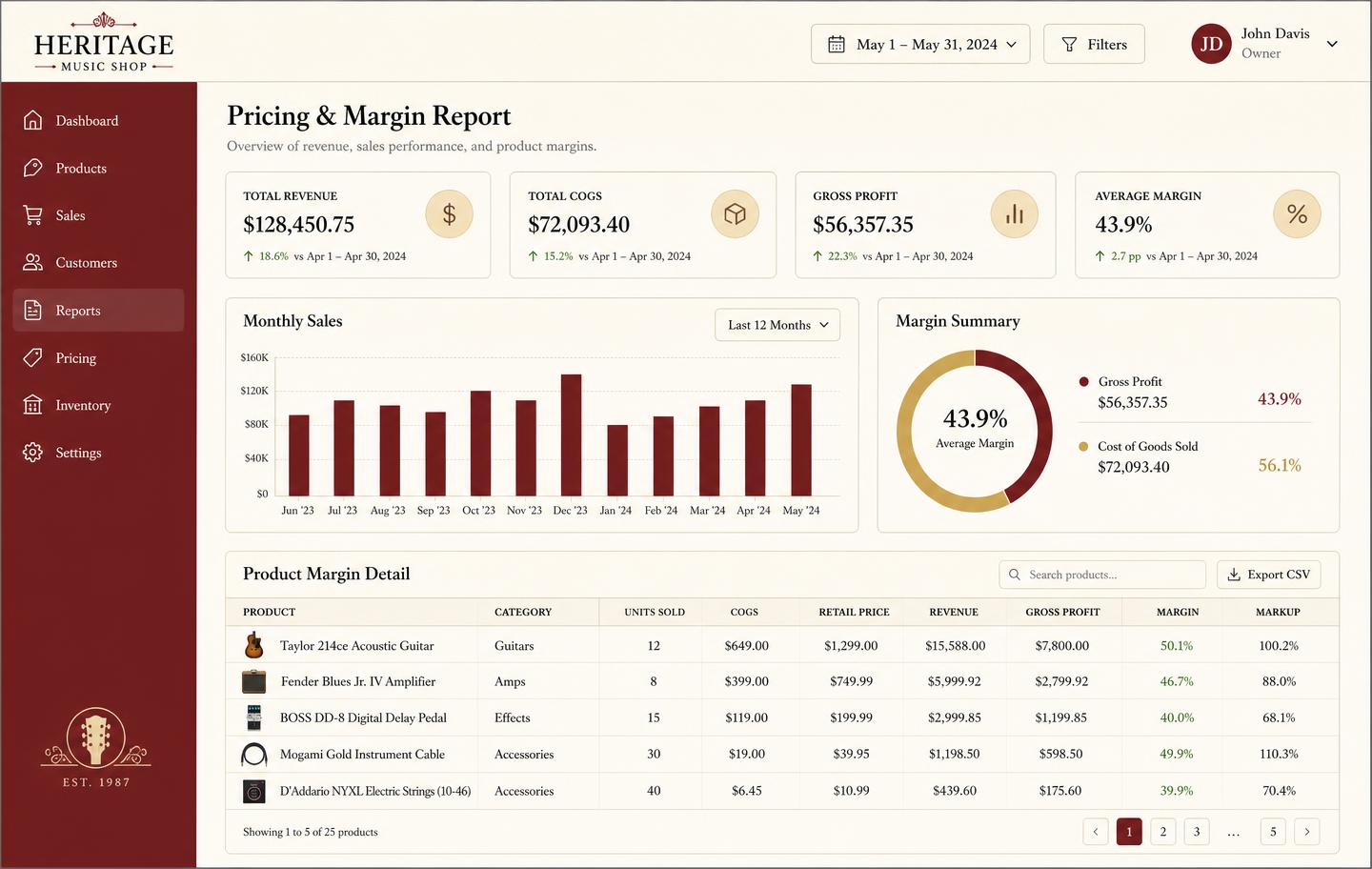
A trade-in that needed a setup and new strings did not earn what the invoice says. If workshop cost cannot attach to the unit, the margin report is fiction.
- Purchase, refurb and selling cost on one record
- Stock ageing so slow lines are visible
- Rental and repair income reported beside retail
Question four: how does pricing scale?
Per-user or per-item pricing turns a good year into a bigger bill. Music Shop Suite is $49/month flat — the price at 200 units is the price at 5,000.
Honest scope
This is a back-office system, not a POS terminal. Keep your till and card reader; run stock, rentals, repairs, lessons and reporting here.
See the workbench before you sign up
Inventory, pricing, lesson bookings, and instrument lending all live in the same back-office dashboard — no separate apps, no re-keying between them.
Frequently asked
- How do I choose an inventory app?
- Start with whether your stock is serialised and whether items leave the building. Those two answers rule out most general apps immediately.
- Is Music Shop Suite right for every small business?
- No. It is built for shops handling serialised, high-value goods that get rented, repaired or taken on consignment — music shops above all.
- What does it cost?
- $49/month flat, whatever your stock count or team size. No per-user pricing and no free tier.
Keep exploring the workbench
Every part of the shop lives in one system. Follow the workflow closest to what you are trying to fix first.
- Best music store POS softwareHonest comparison of tills vs the back office.
- Shop operations blogPlaybooks for counts, work orders, and lending.
- Small business inventorySerial-level stock, real margin, flat pricing.
- Equipment rental softwareHires by serial, deposits, and utilisation.
- Asset trackingHolders, condition, value, and audit trail.
- Pricing — $49/monthOne plan, every module, no per-seat surprises.
Sign up today
Run your shop on one workbench — starting today.
$49/month, no contracts, no trial. Import your spreadsheet, invite your team, and have inventory, repairs, rentals, and lessons in one place tonight.