Warranty tracking
Instrument Warranty Tracking Software That Answers 'Is It Covered?'
Warranty questions arrive at the worst moment: a customer at the counter with a fault, a supplier asking for a purchase reference, and nobody able to find the invoice. Music Shop Suite keeps coverage dates, receipts, and claim history on the instrument itself, tied to its serial number.
- Warranty start, expiry, and terms stored per serial number
- Purchase receipt and supplier invoice reference attached
- Expiring-soon list so coverage is used, not wasted
- Claim status tracked from submission to credit received
- Repair work orders linked to the warranty they fall under
Coverage lives on the instrument
Not in a folder, not in an inbox. Serial number, purchase date, supplier, warranty length, and expiry sit on the unit record — the same record your bench and your front desk already open.
- Manufacturer and retailer warranty tracked separately
- Extended-cover terms recorded where sold
- Receipt and invoice references attached
Answer the counter question in seconds
Search the serial, see the purchase date and remaining coverage, and quote accordingly. No customer waits while somebody scrolls a year of email.
Claims that do not stall
A claim needs the serial, the purchase evidence, the fault description, and the work performed. All four already exist on the record, so submissions are fast and follow-ups are tracked.
- Claim submitted, accepted, rejected, credited
- Supplier contact and reference number
- Credit or replacement reconciled against the unit
Stop absorbing costs you could reclaim
Shops routinely repair covered instruments at their own expense simply because nobody checked. An expiring-soon and still-covered view turns that quiet leakage into recovered margin.
Warranties on rental and lending fleets too
Fleet instruments come with coverage as well. Warranty details sit on each rental unit next to its service history, so a covered valve job is claimed rather than swallowed.
Musicians and teachers can use it for their own gear
If you own the instruments rather than sell them, the same record set works for personal collections — purchase evidence, coverage dates, and a service history worth having when you sell.
See the workbench before you sign up
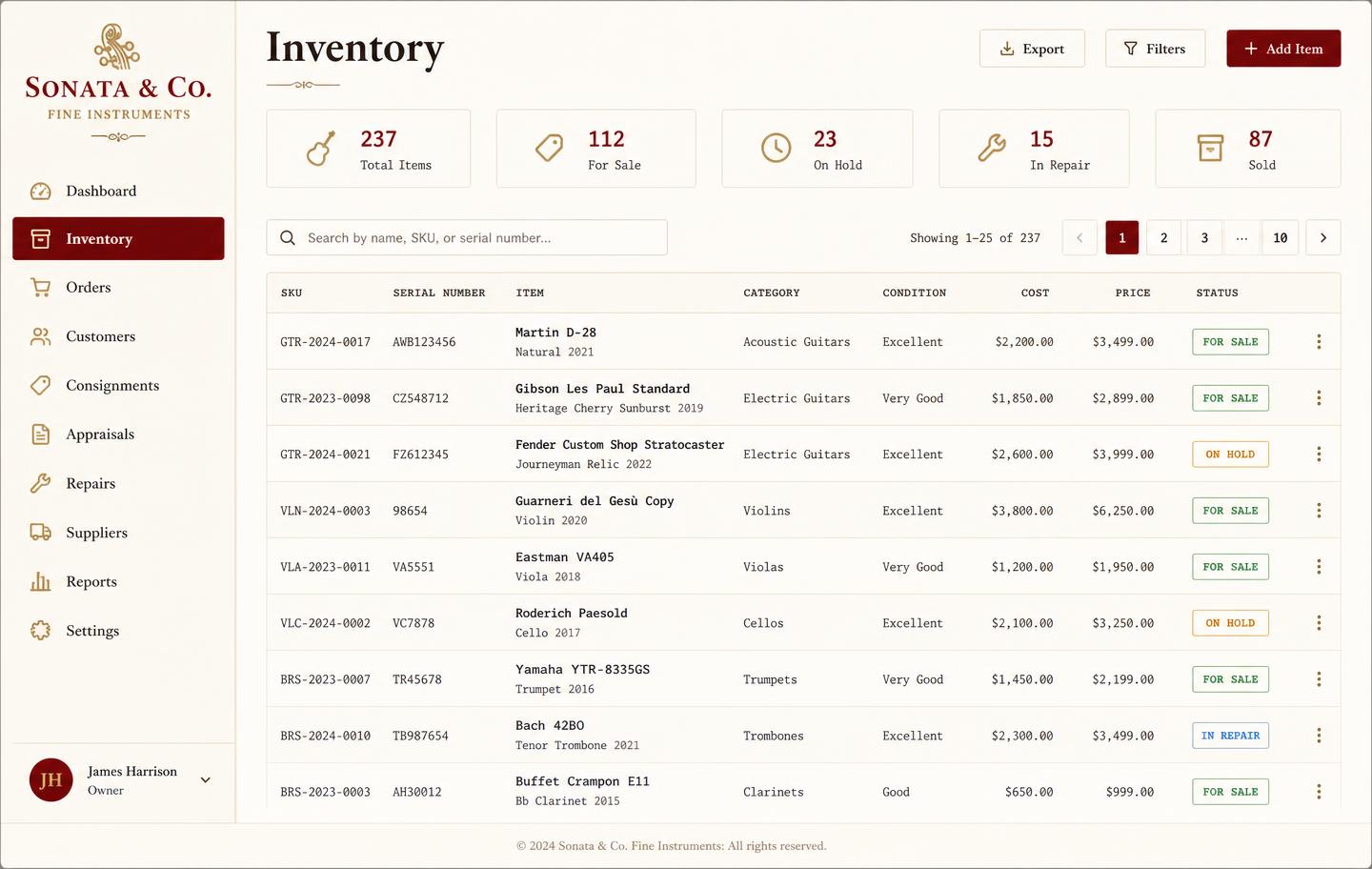
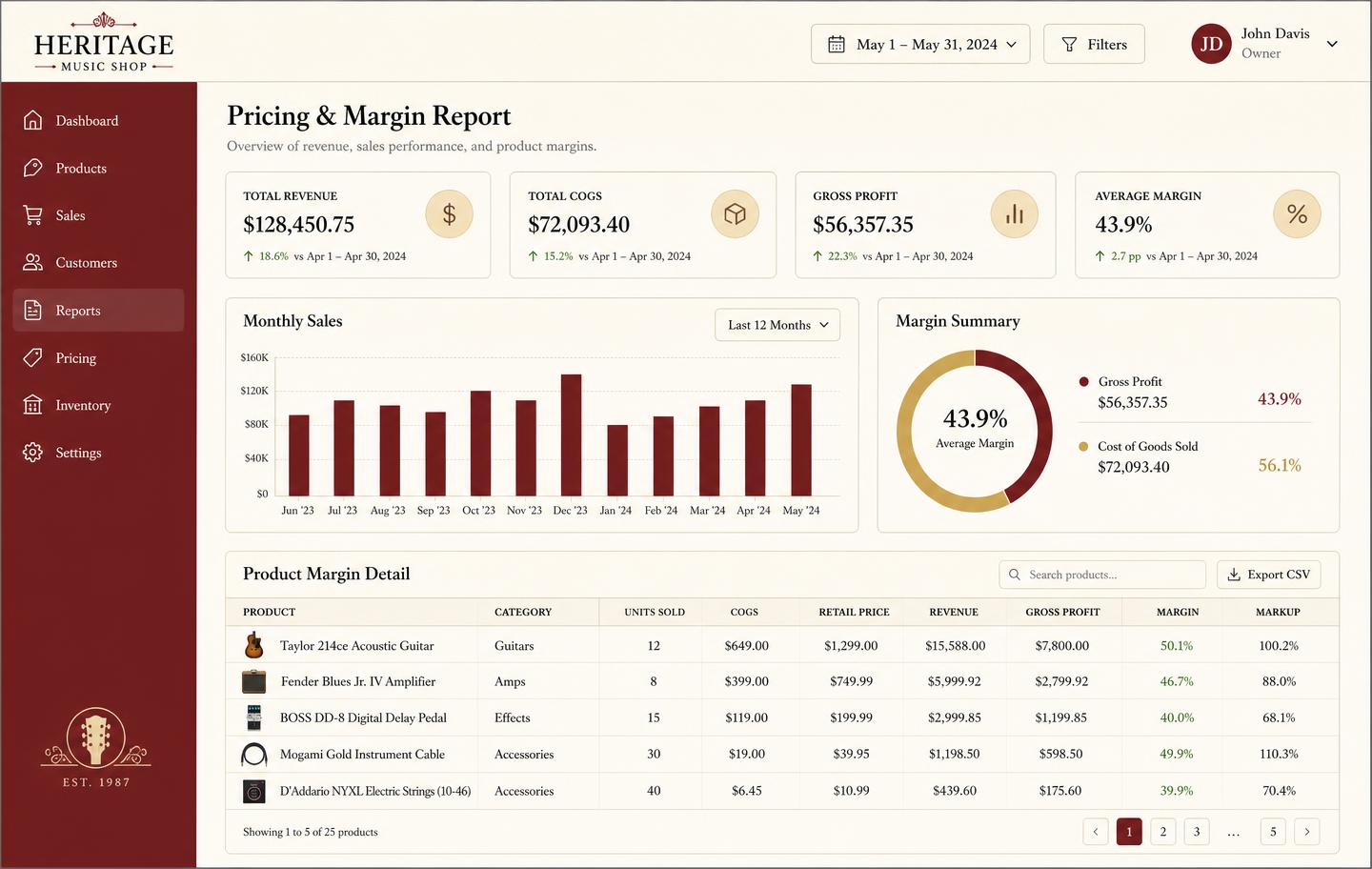
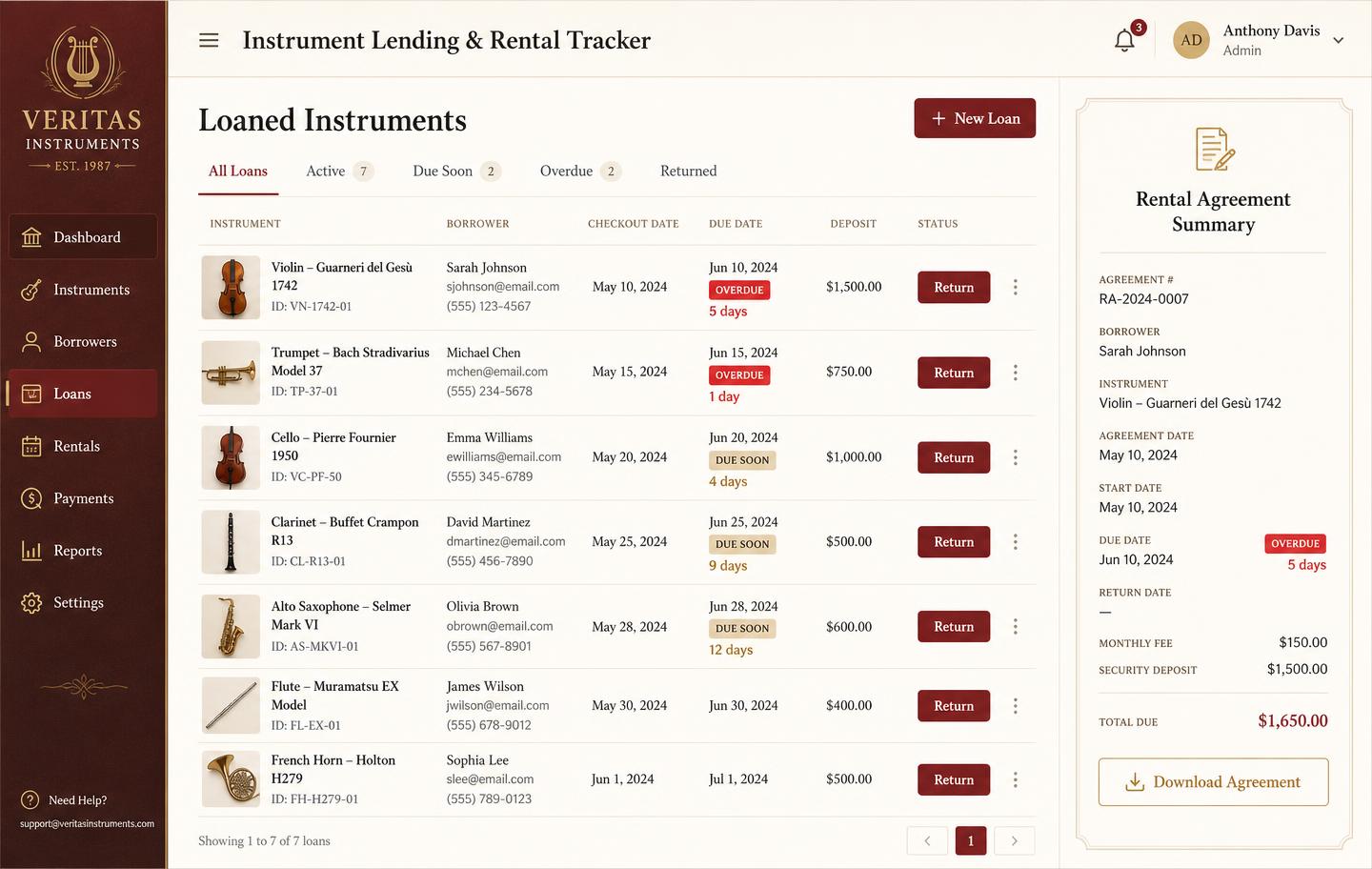
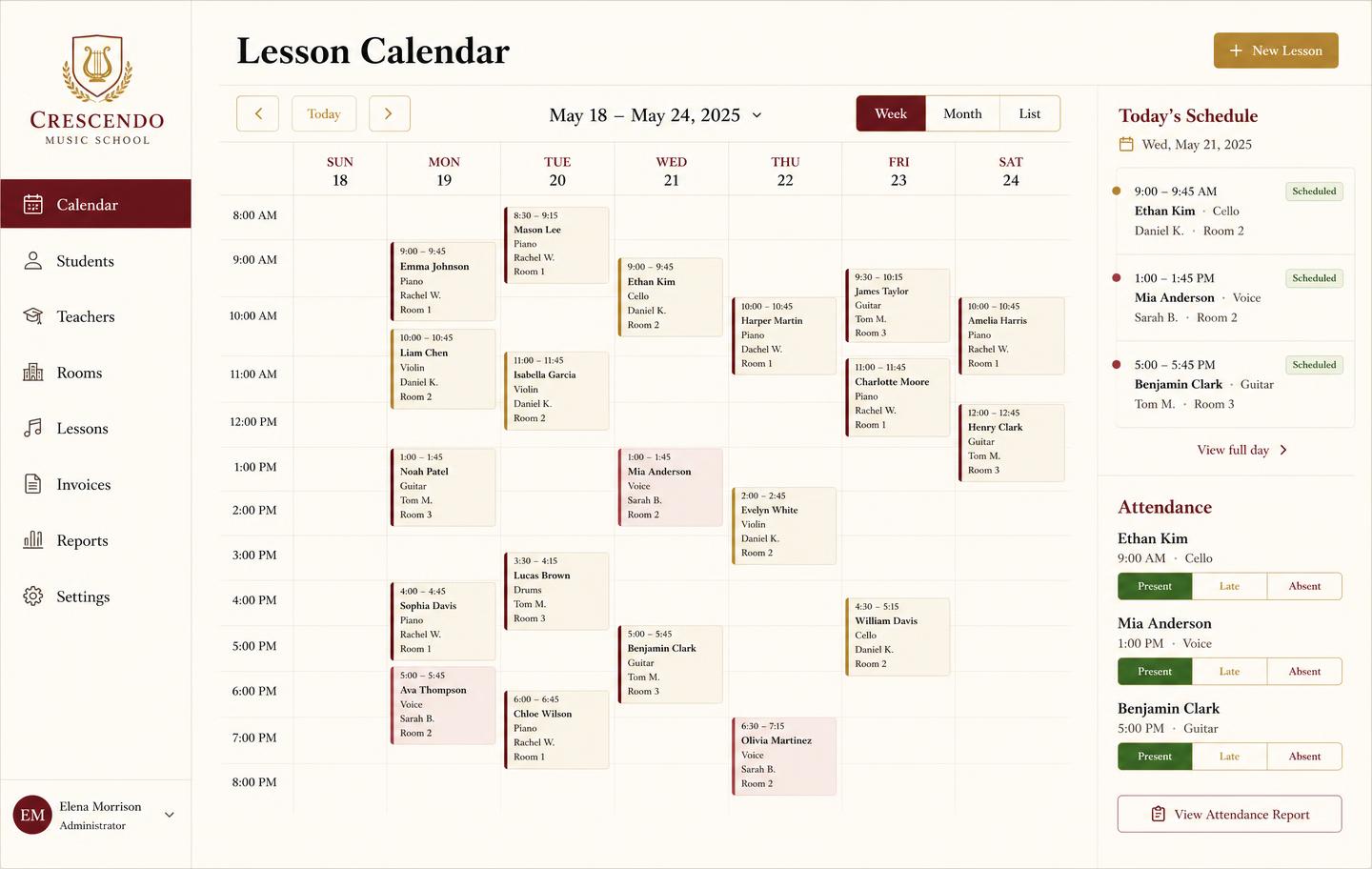
Inventory, pricing, lesson bookings, and instrument lending all live in the same back-office dashboard — no separate apps, no re-keying between them.
Frequently asked
- How does warranty tracking work?
- Warranty terms, start date, expiry date, and the supplier or manufacturer sit on each instrument's record alongside the purchase receipt. Expiring warranties surface as a list rather than as a surprise at the counter.
- Can it track warranties on instruments I have sold?
- Yes. The unit record survives the sale, so when a customer returns eight months later with a fault you can see what they bought, when, from whom you bought it, and whether it is still covered.
- Does it handle manufacturer warranty claims?
- It keeps everything a claim needs in one place — serial, purchase date, supplier invoice reference, fault description, and the repair work order — so submitting a claim is a copy job rather than an archaeology project.
- What does it cost?
- $49 a month for the whole system, including inventory, clients, rentals, repairs, lessons, and accounting.
Keep exploring the workbench
Every part of the shop lives in one system. Follow the workflow closest to what you are trying to fix first.
- Best music store POS softwareHonest comparison of tills vs the back office.
- Trade-in managementOffers, refurb cost, and realised margin per unit.
- Brass & woodwind repairPad and cork jobs, school batches, and loaners.
- Shop bookkeepingProfit by line, stock value, and month-end exports.
- Serial number trackingOne card per unit with full history and audit log.
- Pricing — $49/monthOne plan, every module, no per-seat surprises.
Sign up today
Run your shop on one workbench — starting today.
$49/month, no contracts, no trial. Import your spreadsheet, invite your team, and have inventory, repairs, rentals, and lessons in one place tonight.