Trade-in management
Trade-In Management Software for Music Shops
Trade-ins are where independent shops make — or quietly lose — their best margin. Music Shop Suite records the offer, the condition, the refurbishment cost, and the eventual sale price on one unit card, so you can see exactly what your buying decisions earned.
- Condition grading and intake photos on every trade-in
- Offer, refurb cost, and asking price on one record
- Part-exchange credit applied against a new sale
- Seller details retained for provenance and insurance
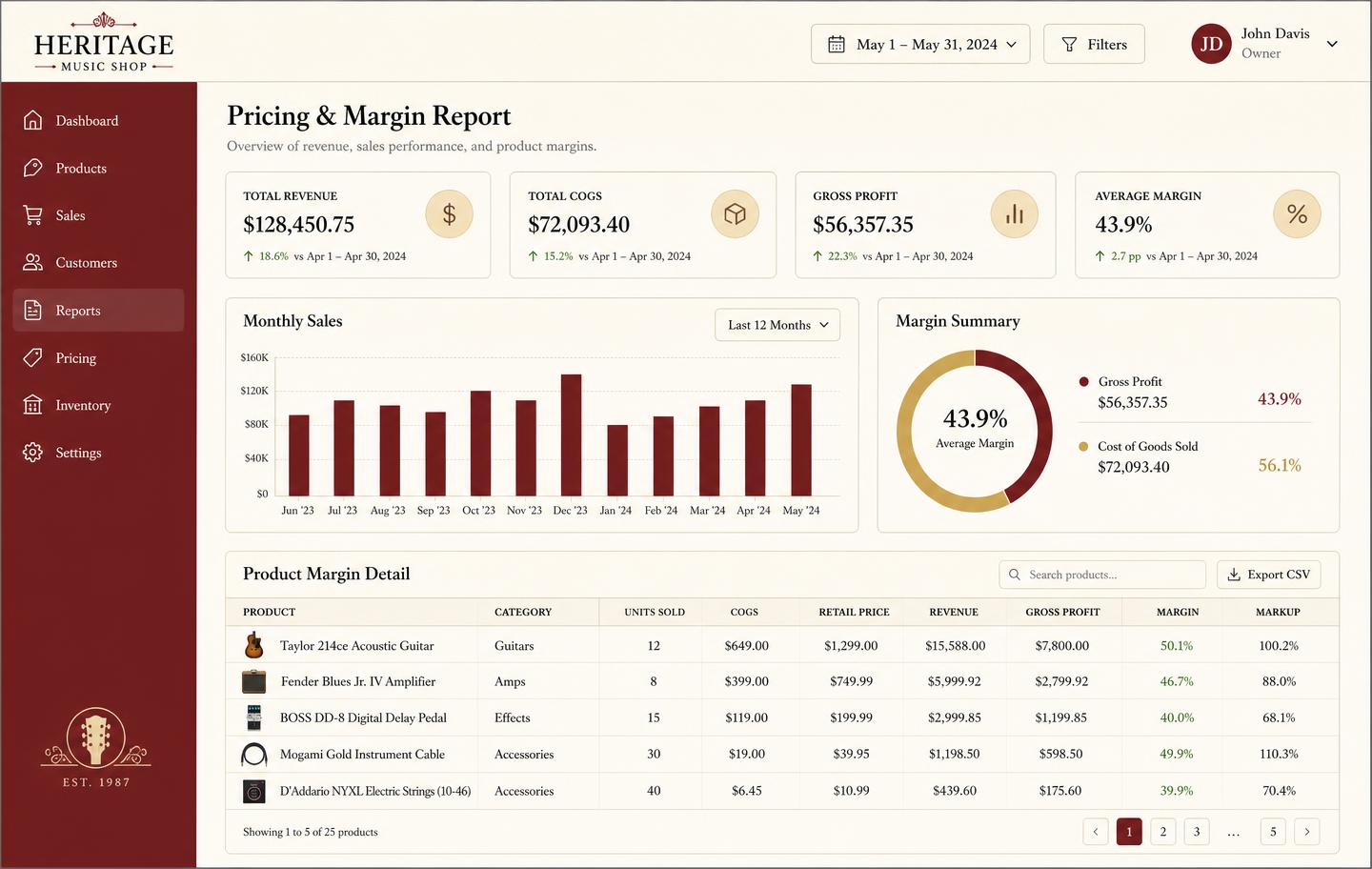
- Realised margin per unit once it sells
Make offers from your own numbers
The best guide to what a used instrument is worth is what the last three sold for in your shop. Trade-in history gives you offer, refurb spend, days on the floor, and final price for every comparable unit you have handled.
- Comparable trade-ins by model and condition
- Average days on the floor per category
- Margin after refurbishment, not before
Refurbishment is a cost, not a favour
A setup, a fret dress, or a new set of pads is real money. Bench jobs attach to the unit, so parts and labour land on the cost basis instead of disappearing into the workshop.
- Repair jobs linked to the traded unit
- Parts and labour added to cost basis
- Ready-for-floor status when work is signed off
Part-exchange without arithmetic on a receipt pad
Apply the agreed trade value as credit on the new sale. Both instruments keep their own history and the customer record shows the whole deal.
Provenance you can produce on request
Seller name, ID reference, date, serial number, and intake photographs stay attached to the instrument forever — the record you want when someone asks where it came from.
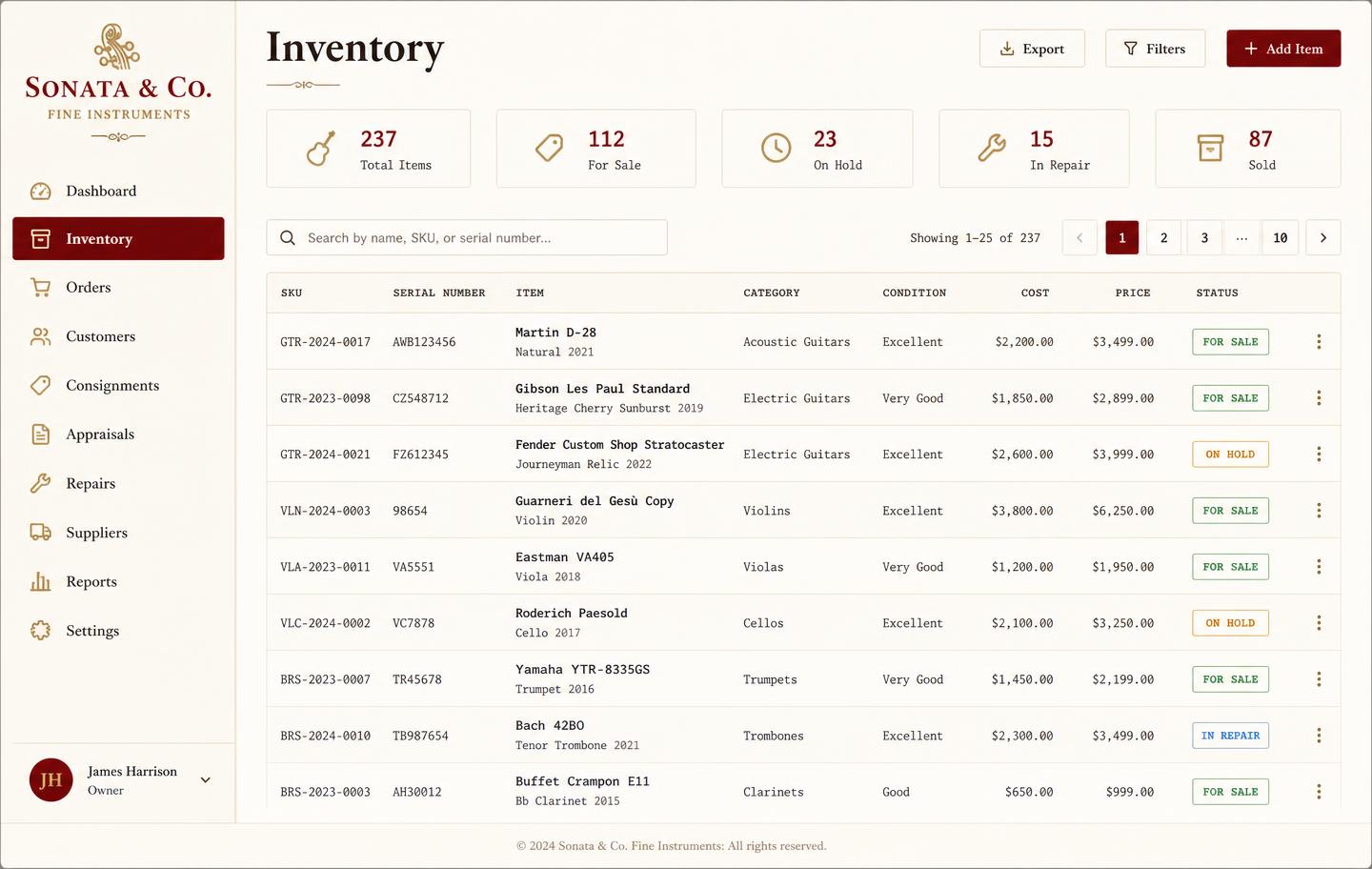
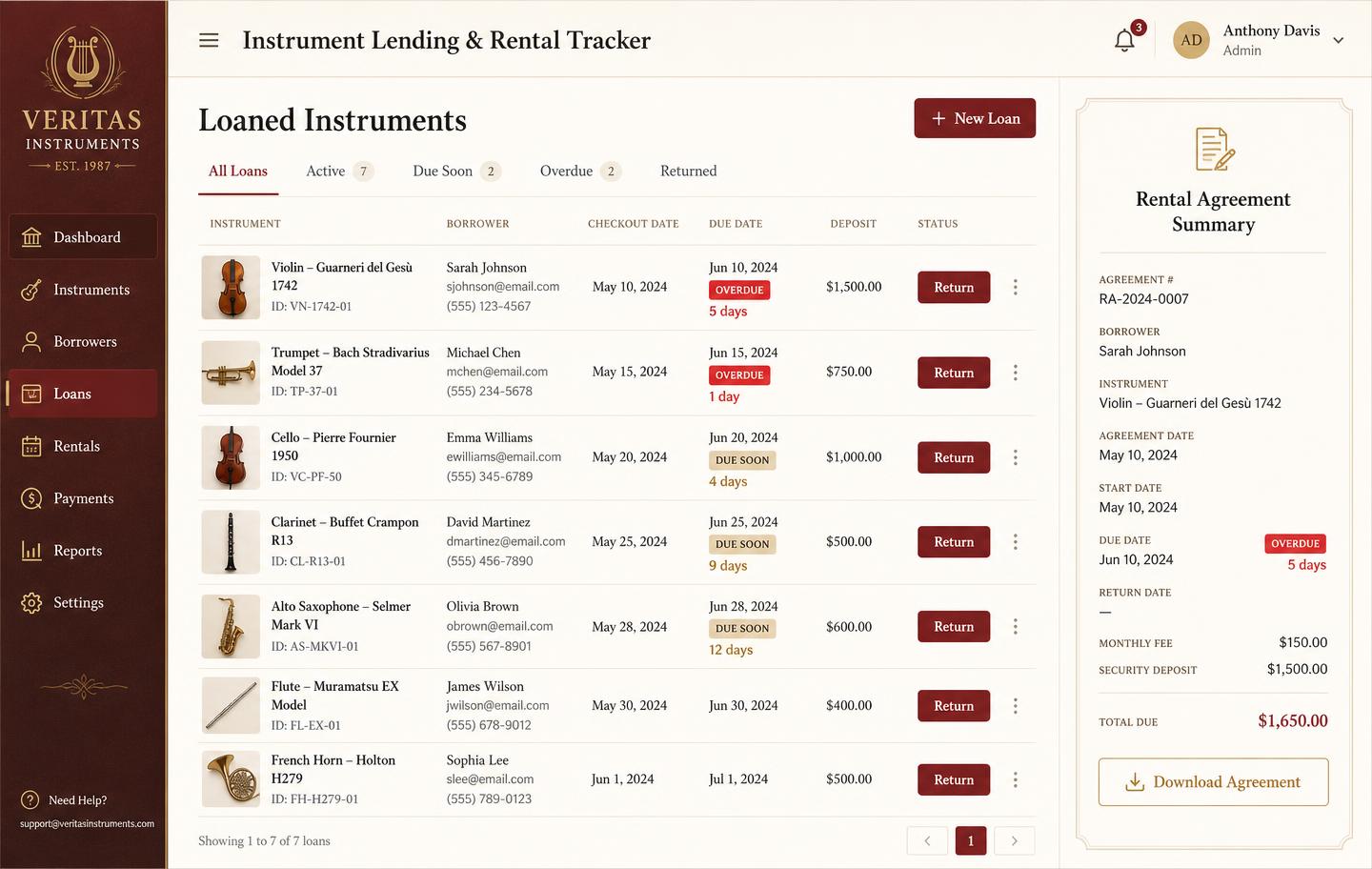
See the workbench before you sign up
Inventory, pricing, lesson bookings, and instrument lending all live in the same back-office dashboard — no separate apps, no re-keying between them.
Frequently asked
- How do you value a trade-in instrument?
- You record the condition grade, the offer you made, and any refurbishment cost. The Suite then shows realised margin once the unit sells, so your next offer is based on your own history rather than guesswork.
- Can I part-exchange against a new sale?
- Yes. A trade-in can be applied as credit against a new instrument, and both sides of the deal stay linked on the customer record.
- Does refurbishment cost get added to the item?
- Yes. Parts and bench time from a repair job roll into the unit's cost basis, so the margin you see is the margin you actually made.
- Can I track where a traded instrument came from?
- Yes. Every unit keeps the seller, the date, the offer, the condition at intake, and photographs — useful for provenance and for police or insurance requests.
Keep exploring the workbench
Every part of the shop lives in one system. Follow the workflow closest to what you are trying to fix first.
- Best music store POS softwareHonest comparison of tills vs the back office.
- Software vs spreadsheetsWhere Excel stops describing your shelf.
- Rentals vs a CRMWhy contacts and deals cannot track units.
- Work orders vs paperSearchable job cards and real bench capacity.
- Lessons vs Google CalendarAttendance, credits and invoices that agree.
- Pricing — $49/monthOne plan, every module, no per-seat surprises.
Sign up today
Run your shop on one workbench — starting today.
$49/month, no contracts, no trial. Import your spreadsheet, invite your team, and have inventory, repairs, rentals, and lessons in one place tonight.