The three systems most music schools are actually running
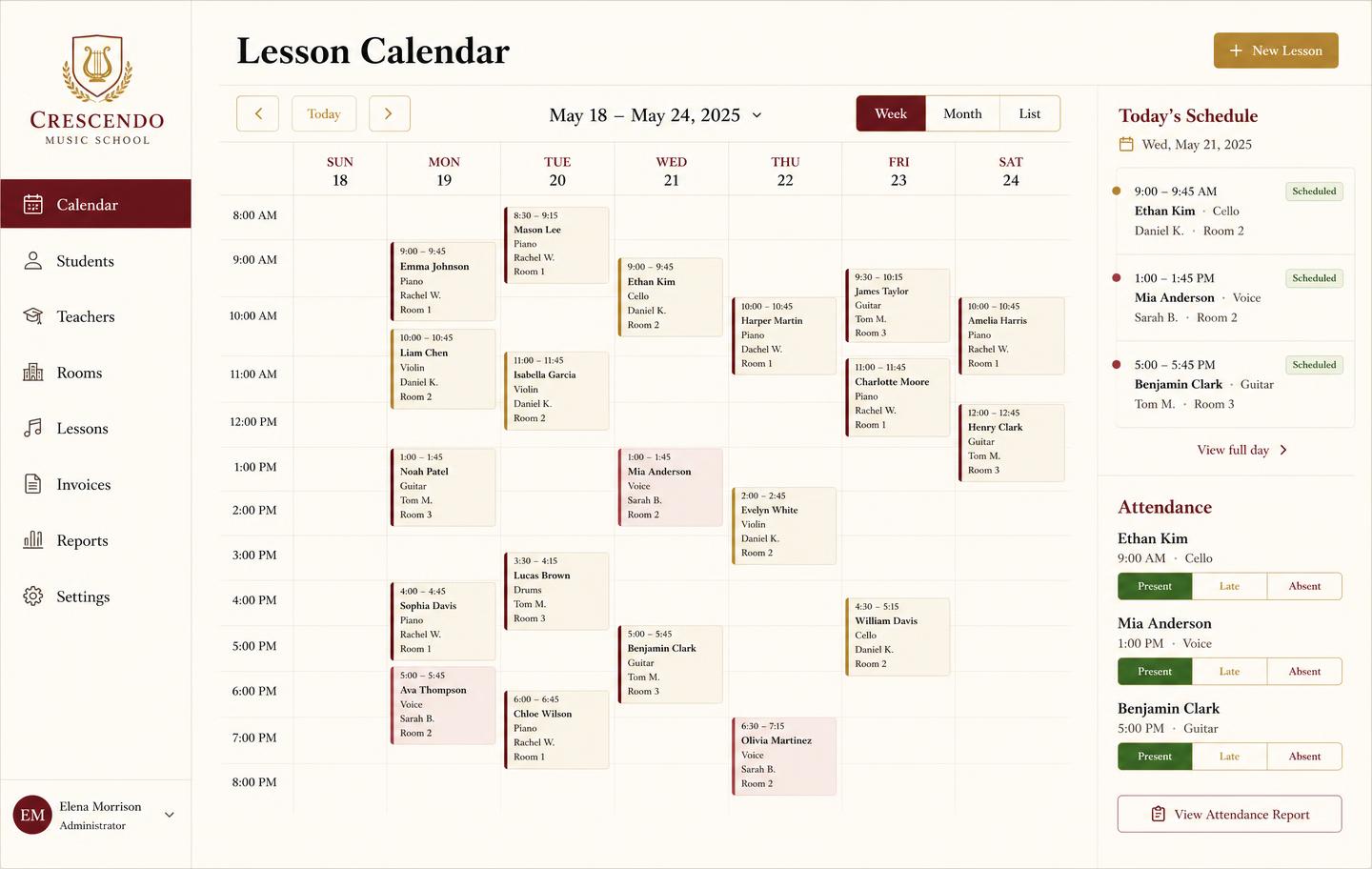
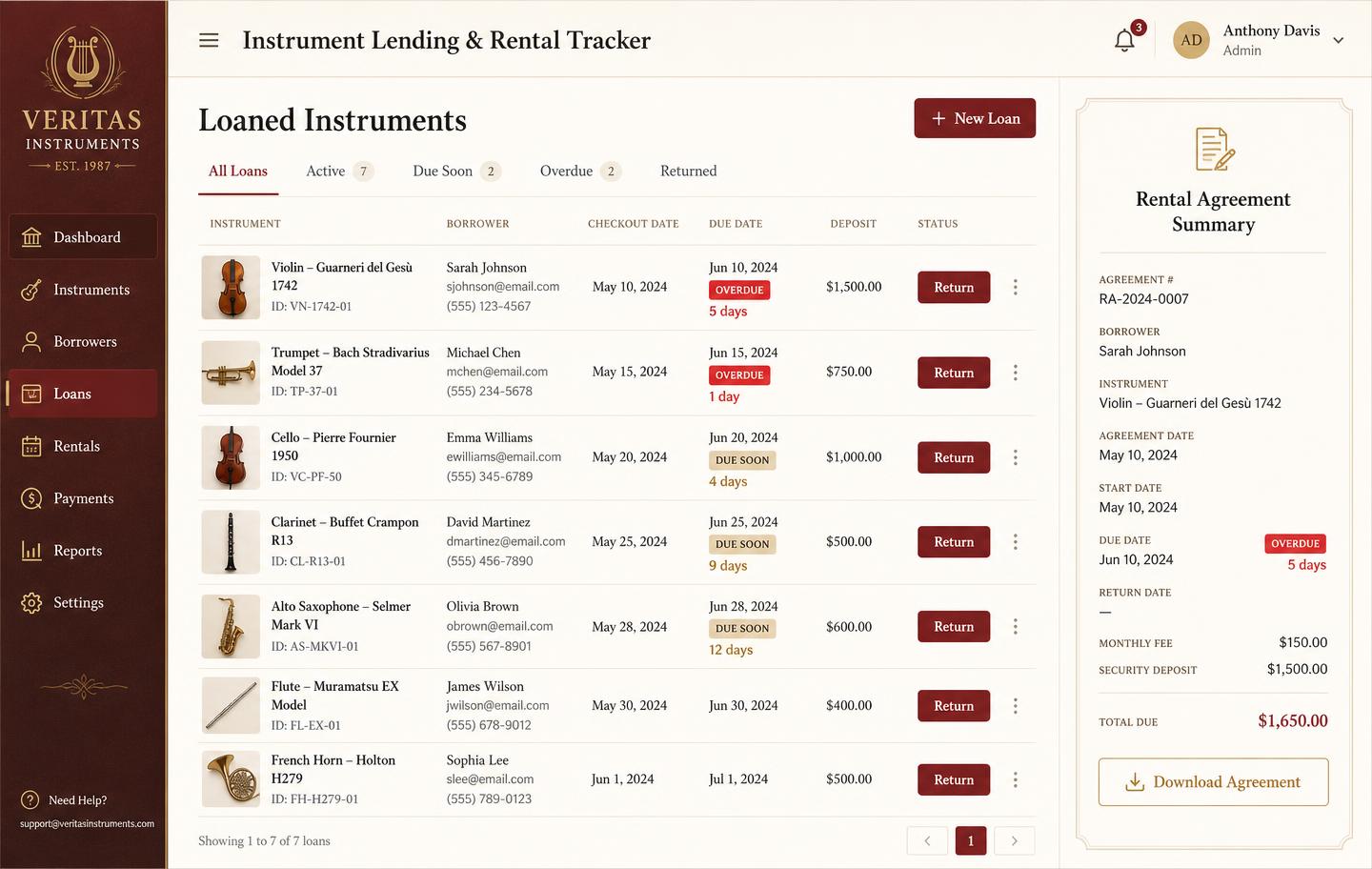
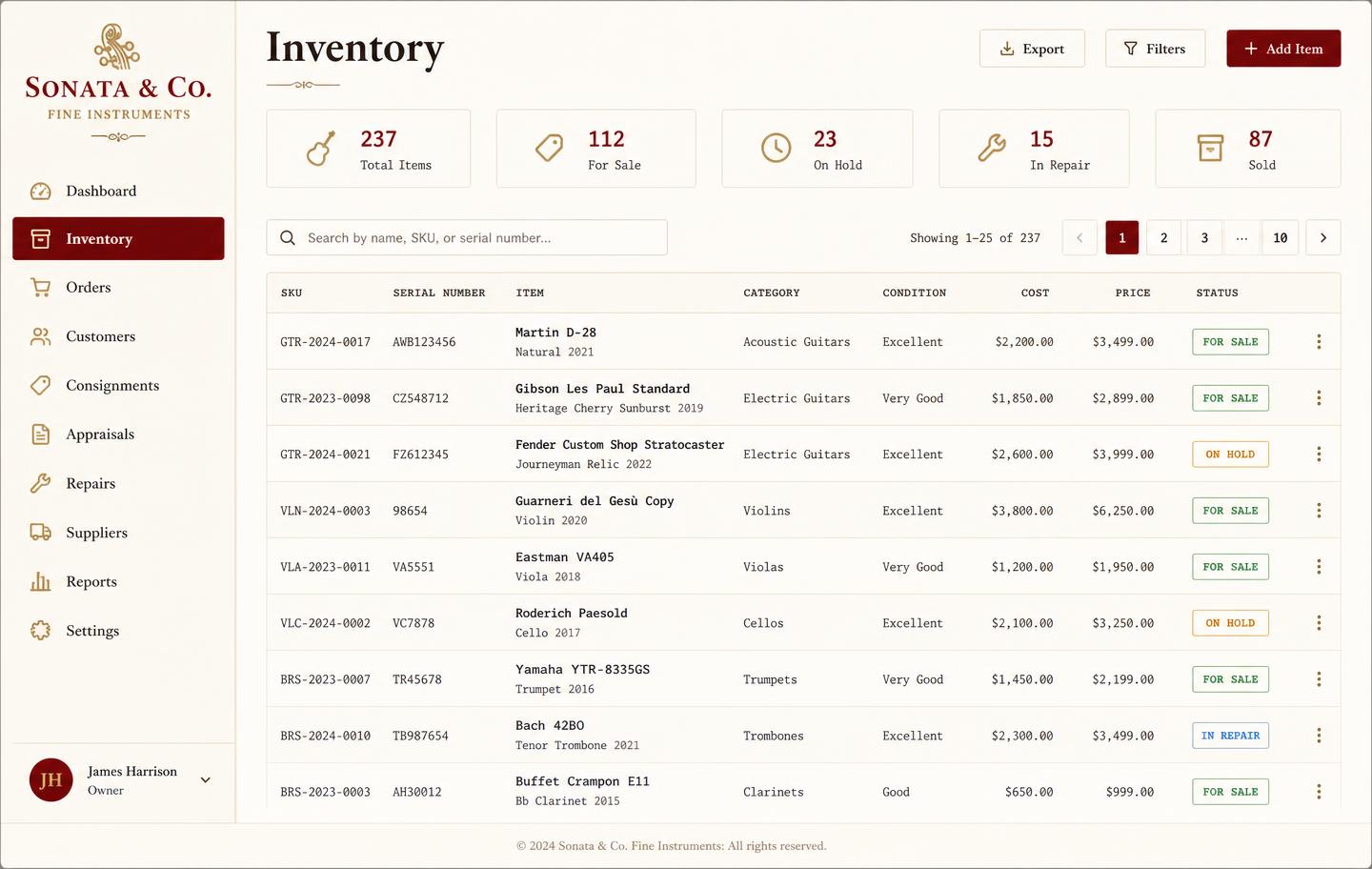
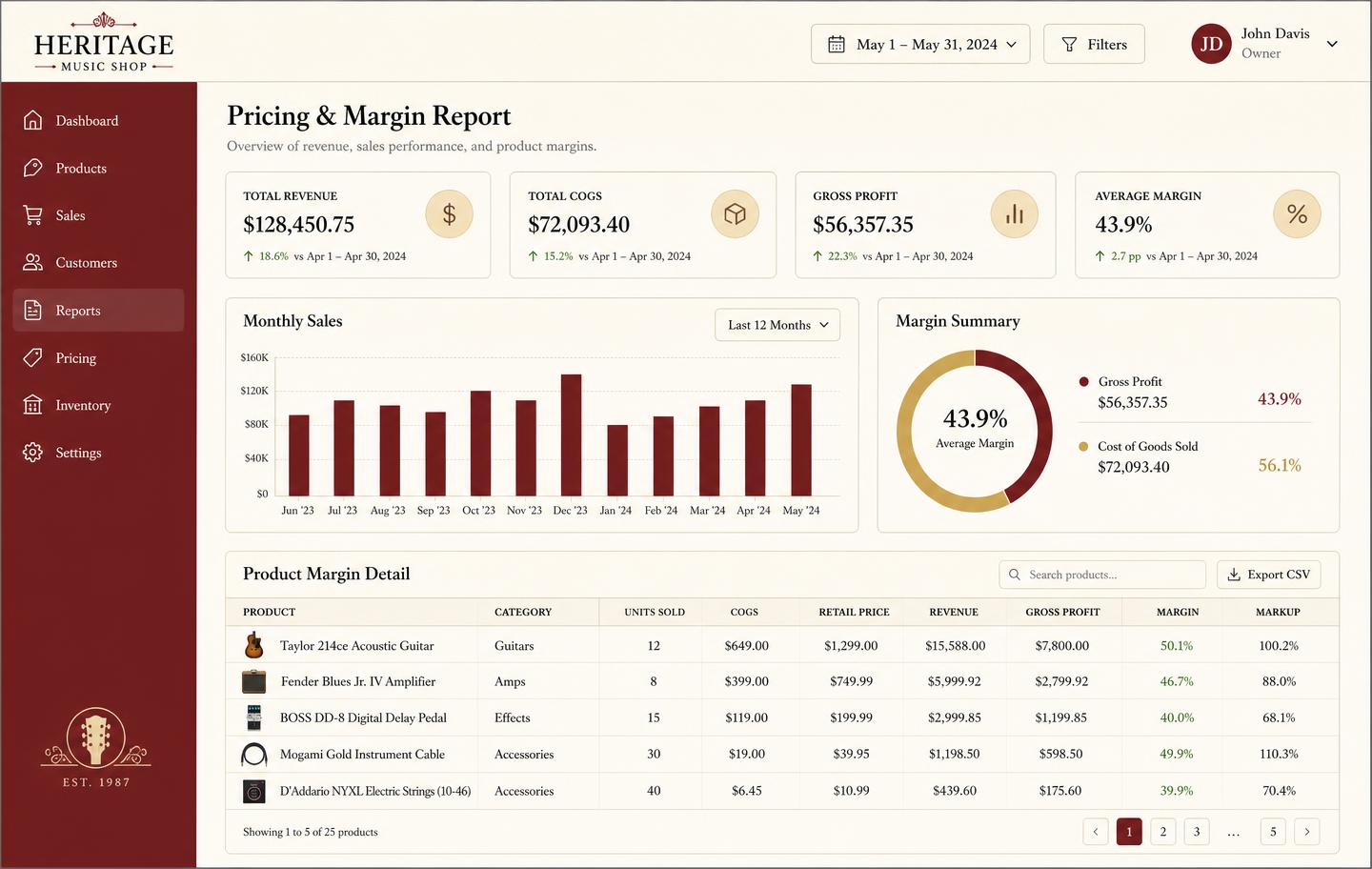
Walk into almost any independent music school and you will find the same architecture, unplanned and identical everywhere. There is a scheduling tool holding the timetable. There is a spreadsheet holding the instrument fleet, usually maintained by one person who is quietly indispensable. And there is a third place — an accounting package, a shoebox, or a bank statement — where money is understood after the fact.
Each of these works. The problem is that they share entities they cannot share data about. A student exists in the scheduler. The clarinet that same student rents exists in the spreadsheet. The tuition and the rental fee exist in the accounts. Nothing links them, so every question that crosses a boundary becomes manual work.
The questions that cross boundaries are, unfortunately, the important ones. Which families are behind on both tuition and rental? Which instruments are out with students who left in December? What did the string programme actually earn once you count the fleet's repair bill? None of those can be answered by a system that only knows about lessons.