Comparison
Inventory Software vs Spreadsheets for a Music Shop
Almost every independent shop starts in Excel or Google Sheets, and for a while it works. The comparison below is about the point where it stops working — serial numbers, consignment owners, instruments out on loan, and margin that includes workshop time.
- Spreadsheets: free, flexible, and instantly out of date
- Software: one record per unit, with a history you can trust
- Serial-level tracking is where sheets break first
- Consignment and loans need owners and due dates, not columns
- Margin after refurb cost is a calculation, not a formula you maintain
Where a spreadsheet still wins
It is free, everyone can use it, and you can restructure it in seconds. If you carry a small number of interchangeable lines and nothing leaves the building, keep the sheet.
- Small, non-serialised stock lists
- One person doing all the updates
- No rentals, loans, repairs or consignment
Where it starts costing money
Two people edit the same file, a filter is left on, a row is deleted, and the sheet quietly disagrees with the shelf. Nobody notices until stocktake or an insurance claim.
- No record of who changed what, or when
- The same guitar counted as in stock and out on approval
- Rental due dates only exist in somebody's memory
- Refurb costs never make it into the margin figure
What software adds that formulas cannot
A unit record that follows the instrument from purchase to sale — through the workshop, a loan, a consignment agreement and a trade-in — with every change timestamped and attributed.
An honest limitation
Music Shop Suite is a back-office system, not a full POS terminal. If you need a till drawer and card reader, keep your POS and use this for stock, rentals, repairs, lessons and reporting.
See the workbench before you sign up
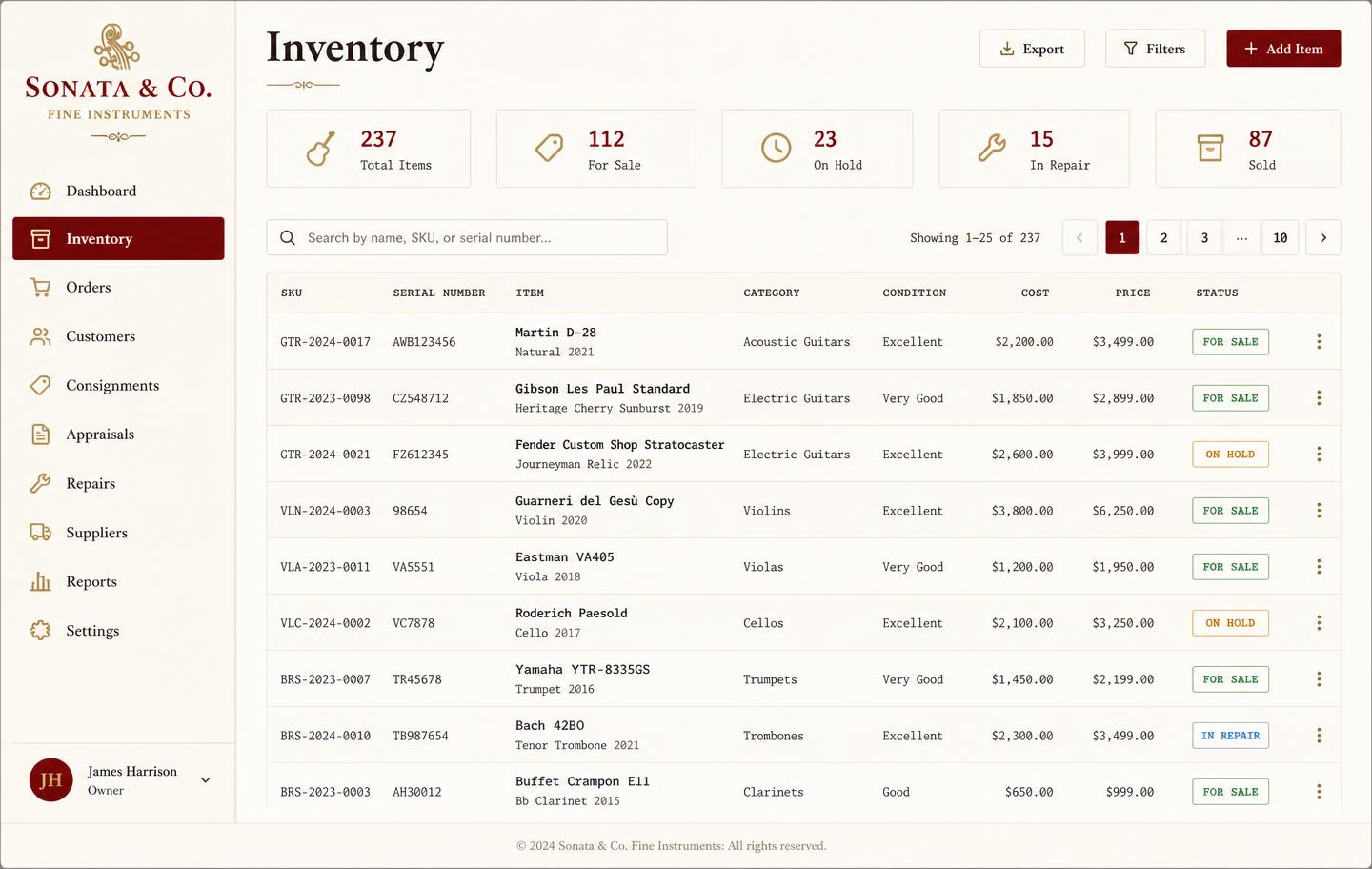
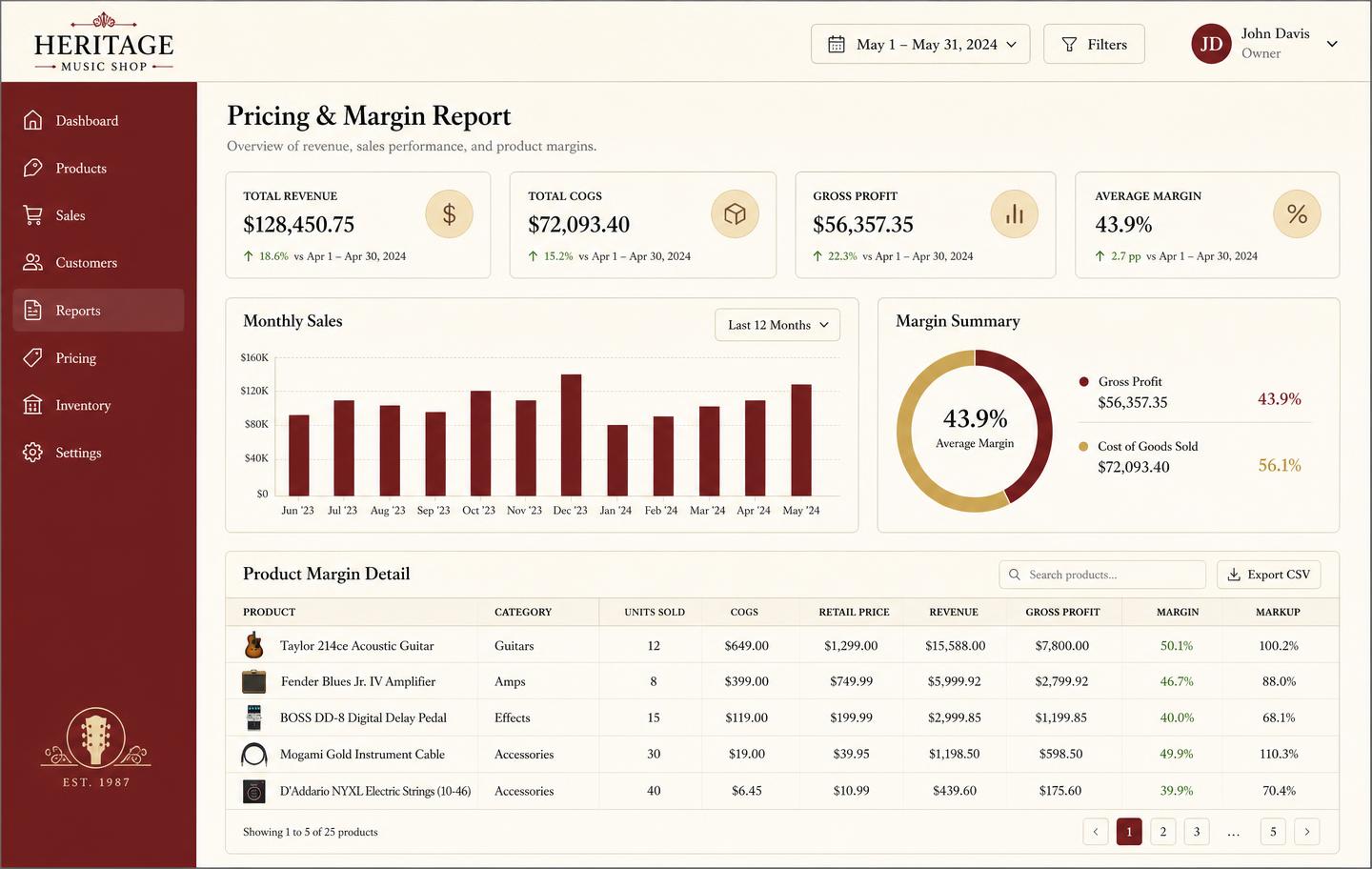
Inventory, pricing, lesson bookings, and instrument lending all live in the same back-office dashboard — no separate apps, no re-keying between them.
Frequently asked
- Is a spreadsheet ever good enough for stock?
- For a few dozen non-serialised lines, yes. Once units are individually identifiable — serial numbers, consignment owners, loans out — a spreadsheet stops describing reality.
- Can I import my existing spreadsheet?
- Yes. Bring your columns over as your starting stock list, then keep adding units the normal way.
- What does the switch actually cost?
- $49/month flat, no per-user or per-item pricing, and no free tier — so the roadmap is paid for by shops rather than by ads.
Keep exploring the workbench
Every part of the shop lives in one system. Follow the workflow closest to what you are trying to fix first.
- Best music store POS softwareHonest comparison of tills vs the back office.
- Consignment softwareSplits, payouts, and days-on-floor aging.
- Shop accounting reportsMargin, revenue by line, and month-end numbers.
- Music school managementStudents, teachers, rooms, tuition, and instruments.
- Instrument dealer softwareSerialised stock, trade-ins, and client history.
- Pricing — $49/monthOne plan, every module, no per-seat surprises.
Sign up today
Run your shop on one workbench — starting today.
$49/month, no contracts, no trial. Import your spreadsheet, invite your team, and have inventory, repairs, rentals, and lessons in one place tonight.