Music teacher software

Music Teacher Software for Lessons, Invoices and the Instruments You Lend

Teaching is the easy part. The rest of it — remembering who cancelled, who owes for last term, which student still has your spare viola, and whether the week actually paid — is what eats the evenings. Music Shop Suite keeps students, the recurring timetable, attendance, invoicing and instruments in one place, so the admin is a review rather than a reconstruction.

  • Recurring weekly slots per teacher, with rooms if you have them
  • Attendance, cancellations and make-up credits on the booking
  • Family records so siblings get one invoice, not three
  • Tuition invoicing generated from attendance, not retyped
  • Serialized tracking for any instrument you lend or rent out
  • $49/month flat — unlimited students, unlimited teachers

The timetable, once

Slots recur weekly and hold the student, the teacher and the room. Conflicts are caught when you save rather than at four o'clock on a Tuesday when two students arrive for the same studio.

  • Recurring terms with per-teacher calendars
  • Group classes and ensembles alongside private lessons
  • Waitlists when a teacher's schedule is full

Attendance that becomes the invoice

Mark the lesson attended, cancelled or credited as you go. At the end of the month the invoice is generated from those marks, so nobody rebuilds the term from a register.

  • Attended, missed, cancelled and make-up states
  • Credits carried to the next invoice automatically
  • Per-student and per-family balances always current

Students and families in one record

Contacts, instrument, level, notes and balance on one card, with siblings grouped into a household so you are billing a family rather than chasing three children separately.

The instruments you lend

Most teachers accumulate a small fleet without meaning to: a school violin, two loaner flutes, a spare amp. Each becomes a serialized record with its current holder, condition and repair history.

  • Who has it, since when, and in what condition
  • Deposits and rental fees if you charge them
  • Repair tickets attached to the instrument itself

What the teaching actually earned

Revenue by student, by teacher and by stream, so you can see whether the Saturday group class is worth the room and whether the loaner fleet pays for its own repairs.

How teachers usually run the week, compared

Three common setups for an independent teacher or small studio, and where each one gives way.

How teachers usually run the week, compared
What you trackCalendar + spreadsheetLesson platformMusic Shop Suite
Weekly recurring lessonsWorksWorksWorks
Attendance registerSeparate sheetBuilt inOn the booking
Make-up creditsManualBuilt inApplied to the invoice
Family / sibling billingManualUsuallyOne household record
Invoices from attendanceRetypedUsuallyGenerated
Room allocationMemorySometimesEnforced on booking
Instruments lent to studentsSpreadsheetNoSerialized records
Repairs on lent instrumentsNowhereNoWork orders
Total earned per streamBank statementLessons onlyAll streams

Why teaching admin grows faster than the teaching does

A teaching practice scales unevenly. Doubling from twenty to forty students roughly doubles the hours taught, which is expected and manageable. What is not expected is that the administration more than doubles, because the work is not per-student — it is per-exception, and exceptions grow with the number of relationships in the system.

With twenty students you can hold the exceptions in your head: the family that pays late, the child who moved to Thursdays, the boy who still has the spare clarinet. With forty you cannot, and the moment you cannot, everything becomes reconstruction — scrolling back through a calendar and a bank statement to work out what happened.

Software helps here not by automating teaching but by recording the exception at the moment it occurs. A cancellation marked on Tuesday is five seconds of work. The same cancellation reconstructed at the end of term is fifteen minutes and a disagreement with a parent.
The lending problem nobody plans for

Almost every teacher ends up lending instruments, and almost none of them set out to. It begins with a spare violin lent for a fortnight so a beginner can start before the family buys. Within three years there is a small fleet, no records, and a persistent low-grade uncertainty about where two of them are.

The reason it decays is that lending has no natural closing event. A lesson is over when the hour ends. A loan ends whenever the instrument happens to come back, which might be next term, might be when the student leaves, and might be never. Without a due date and a record, the default outcome is drift.

Tracking each instrument as a serialized record with a current holder turns the fleet from a vague liability into an asset you can audit in five minutes. It also makes the awkward conversation easy: you are not accusing anyone, you are reading a date off a card.

Choosing between a teaching platform and a broader system

The honest distinction is about physical objects. Teaching platforms — My Music Staff and its peers — are built around students, lessons and payments, and for a studio whose only assets are a room and a diary, they are excellent and often better polished than a broader tool, particularly on parent-facing features and automatic payment collection.

A broader system assumes the practice owns things: instruments that leave the building, repairs that cost money, sometimes a small amount of retail. It carries scheduling and invoicing too, but its data model is built around units as well as people.

Use the one-third test. If less than a third of your administrative frustration involves a physical object, pick a teaching platform and enjoy the depth. If it is more than a third — and for most teachers who lend, rent or maintain instruments it is — a single system that holds both people and objects will save more time than a more polished tool that only holds half of the problem.

See the workbench before you sign up

Inventory, pricing, lesson bookings, and instrument lending all live in the same back-office dashboard — no separate apps, no re-keying between them.

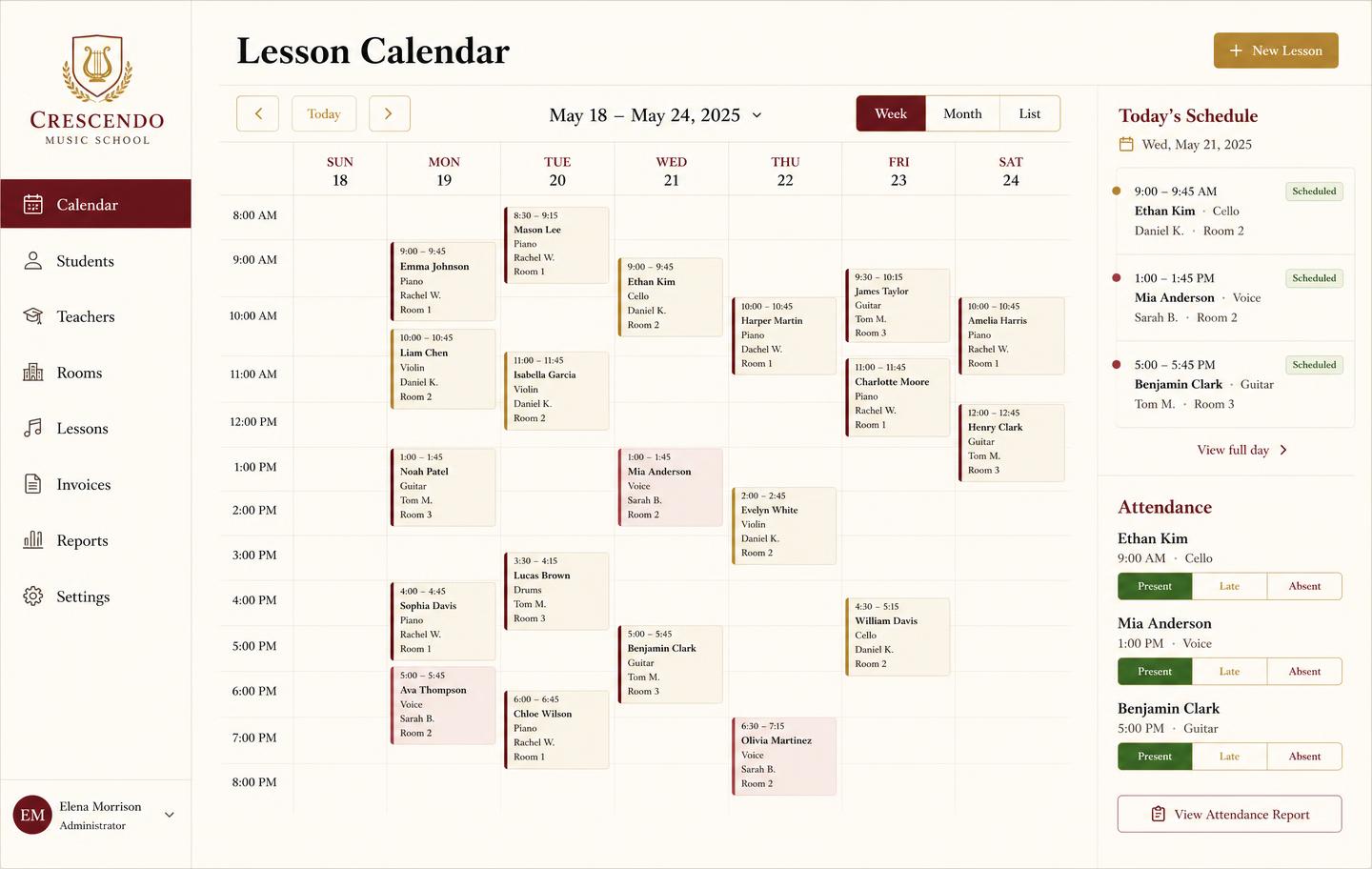
Weekly lesson booking calendar with student lessons, teachers, rooms and attendance
Lesson bookingsA weekly teaching calendar with rooms, teachers, and attendance marking — plus the invoice that follows each lesson block.
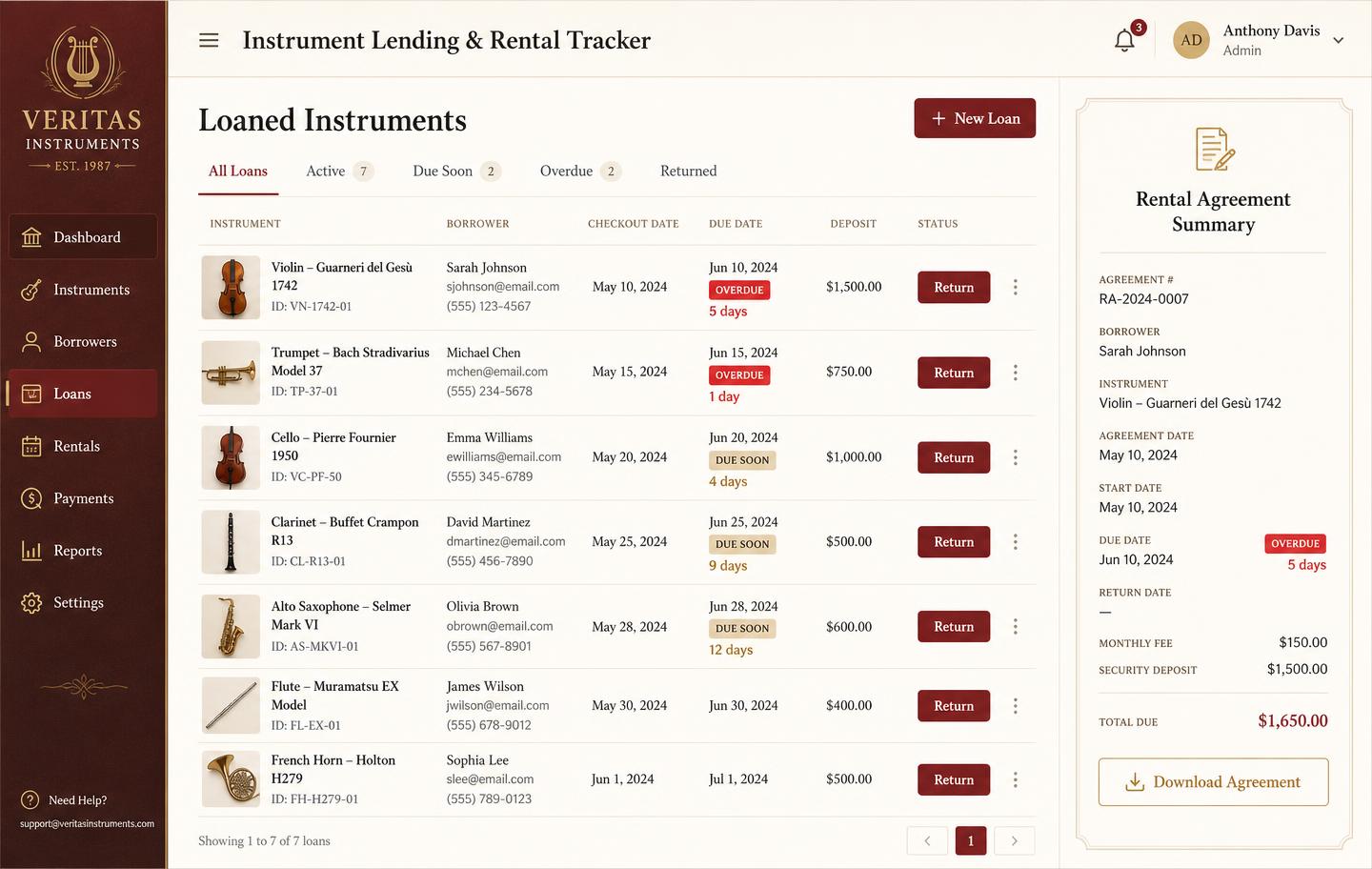
Instrument lending and rental tracker with borrowers, due dates, overdue badges and deposits
Instrument lendingLoans and rentals by unit: who has it, when it is due, what deposit is held, and which agreements are overdue.
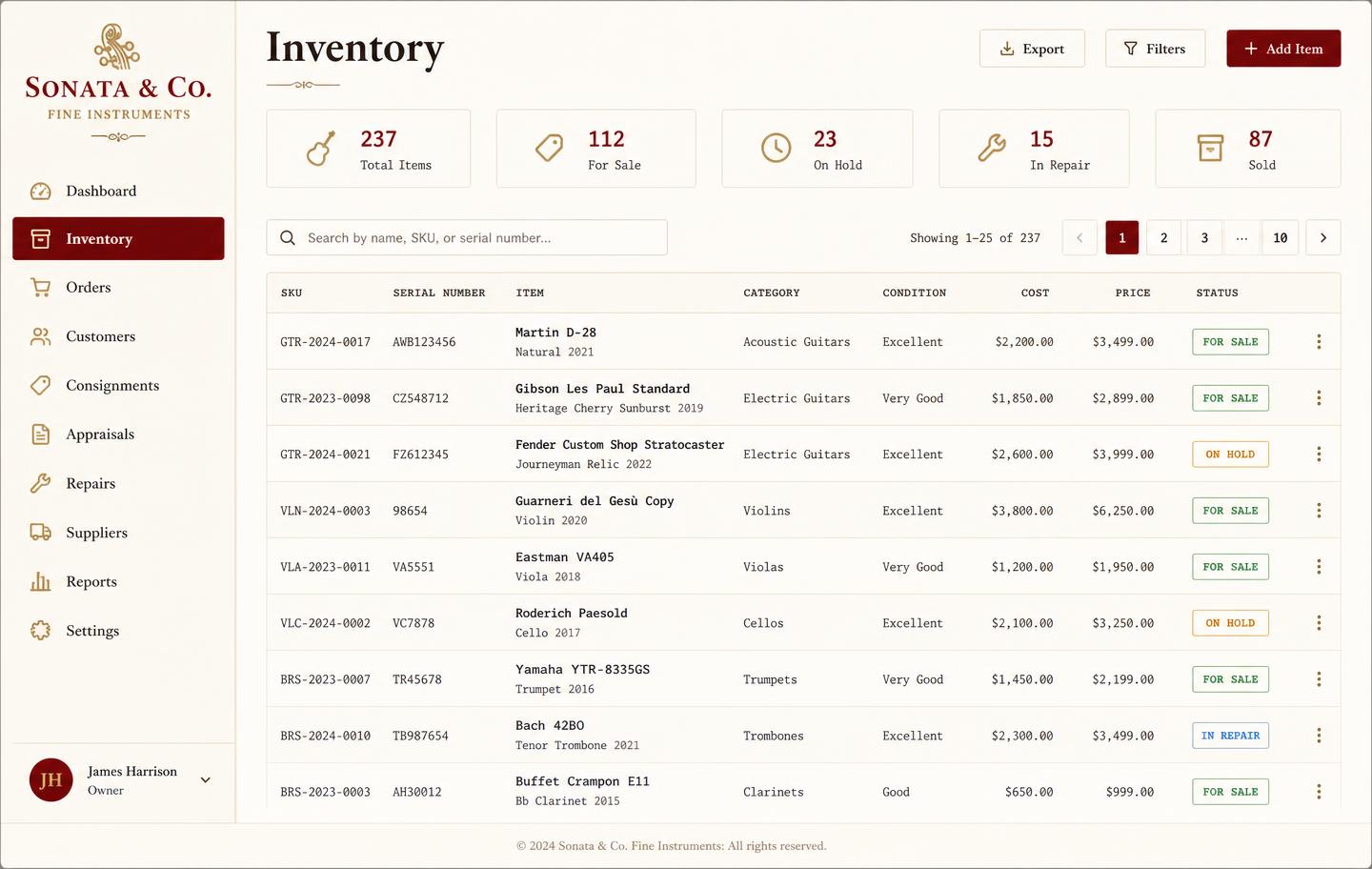
Music shop inventory dashboard listing instruments with SKU, serial number, condition, cost, price and status
InventoryEvery instrument tracked by SKU and serial with condition, cost, retail price, and live status — for sale, on hold, in repair, or sold.
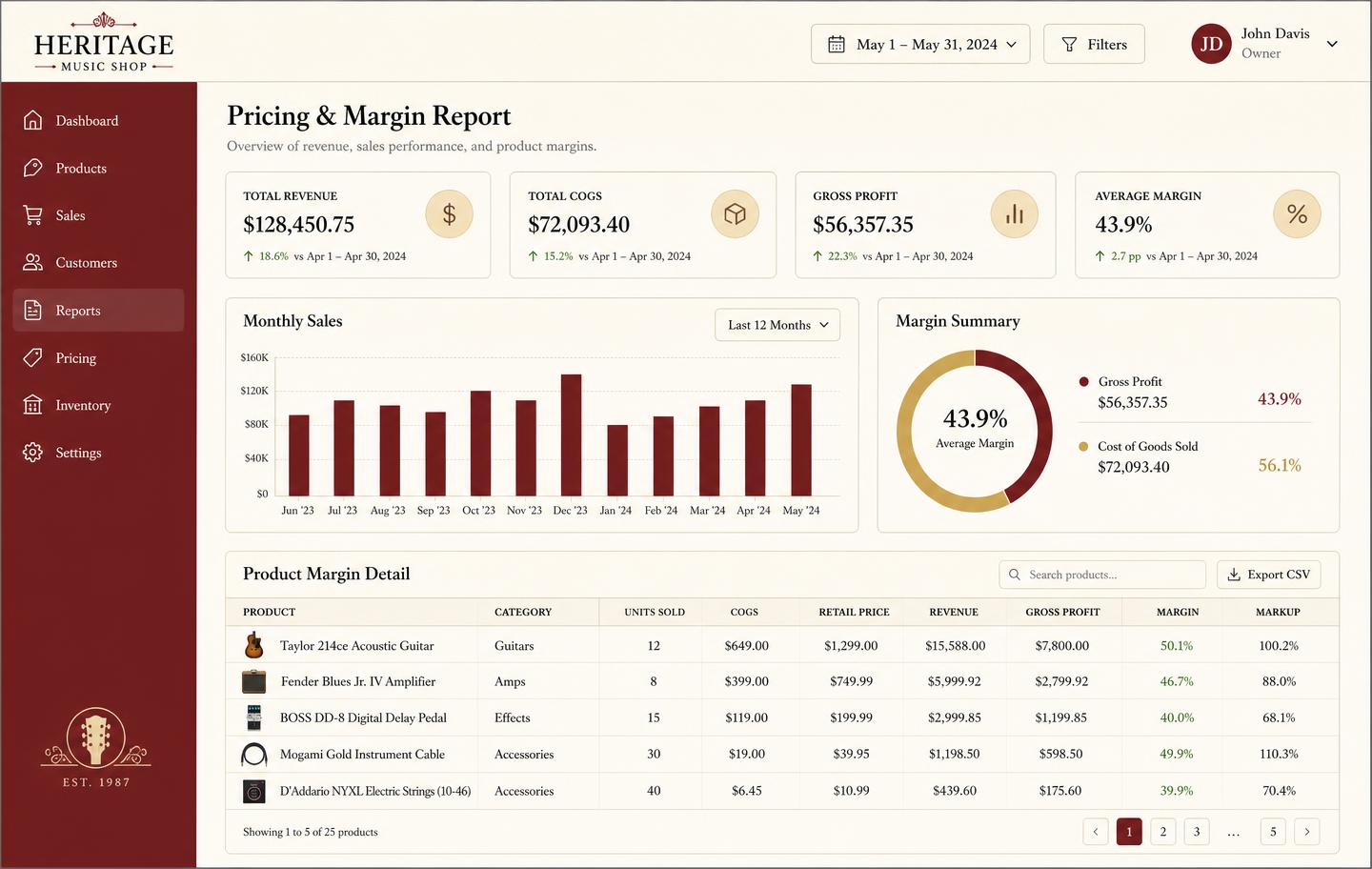
Pricing and margin report showing revenue, cost of goods, gross profit and per-product markup
Pricing & marginRevenue, cost of goods, gross profit, and markup per product so you price from real numbers instead of gut feel.

Honest note

Who this is not for

If you teach ten students, invoice by bank transfer and own no instruments beyond your own, a shared calendar and a notes app are genuinely enough — do not pay for software you will not use. This starts to earn its keep at roughly thirty students, or at any size once instruments leave the building. And if a parent-facing autopay portal is your single most important feature, a dedicated lesson-billing platform is more mature than we are today.

Frequently asked

What is music teacher software?
It is the system a private teacher or teaching studio uses to run the week: student records, a recurring lesson timetable, attendance and make-ups, tuition invoicing, and — if you lend or rent instruments — where those instruments are. Music Shop Suite covers all of it for $49/month flat.
Is this suitable for a single independent teacher?
Yes, though be honest about fit. A solo teacher with twenty students and no instruments will use maybe half the system. It earns its place when you have several teachers, rooms to allocate, or instruments moving in and out of students' homes.
Does it handle recurring lessons and make-up credits?
Yes. Slots repeat weekly by default, attendance is marked on the booking itself, and a cancelled lesson can be credited so the next invoice reflects it automatically rather than being adjusted by hand.
Can I invoice families rather than individual students?
Yes. Siblings roll up into one household record, so a family with three children receives one invoice with three lines instead of three separate bills.
How much does music teacher software cost?
$49/month flat, unlimited students and teachers, every module included. No per-student pricing, no seat licences, no free trial and no contract.
How does it compare to My Music Staff?
My Music Staff is a mature teaching-studio platform with a strong parent portal and autopay. Music Shop Suite is broader: it adds serialized instrument tracking, rentals and repair work orders. If you only teach, My Music Staff may suit you better and we will say so; if instruments are part of your business, this is the wider fit.
Do students get a portal?
Not today. Communication is by invoice and email rather than a parent-facing app. If an autopay portal is your primary requirement, a dedicated lesson-billing platform is more mature.

Sign up today

Run your shop on one workbench — starting today.

$49/month, no contracts, no trial. Import your spreadsheet, invite your team, and have inventory, repairs, rentals, and lessons in one place tonight.