Musical instrument dealer software
Musical Instrument Dealer Software for Serialised, High-Value Stock
Generic retail software assumes twelve identical widgets in a box. A dealer's stock is the opposite: one 1962 Jazzmaster, one consigned cello, one trade-in that needs a neck reset before it can be listed. Music Shop Suite treats every instrument as its own record with its own money attached.
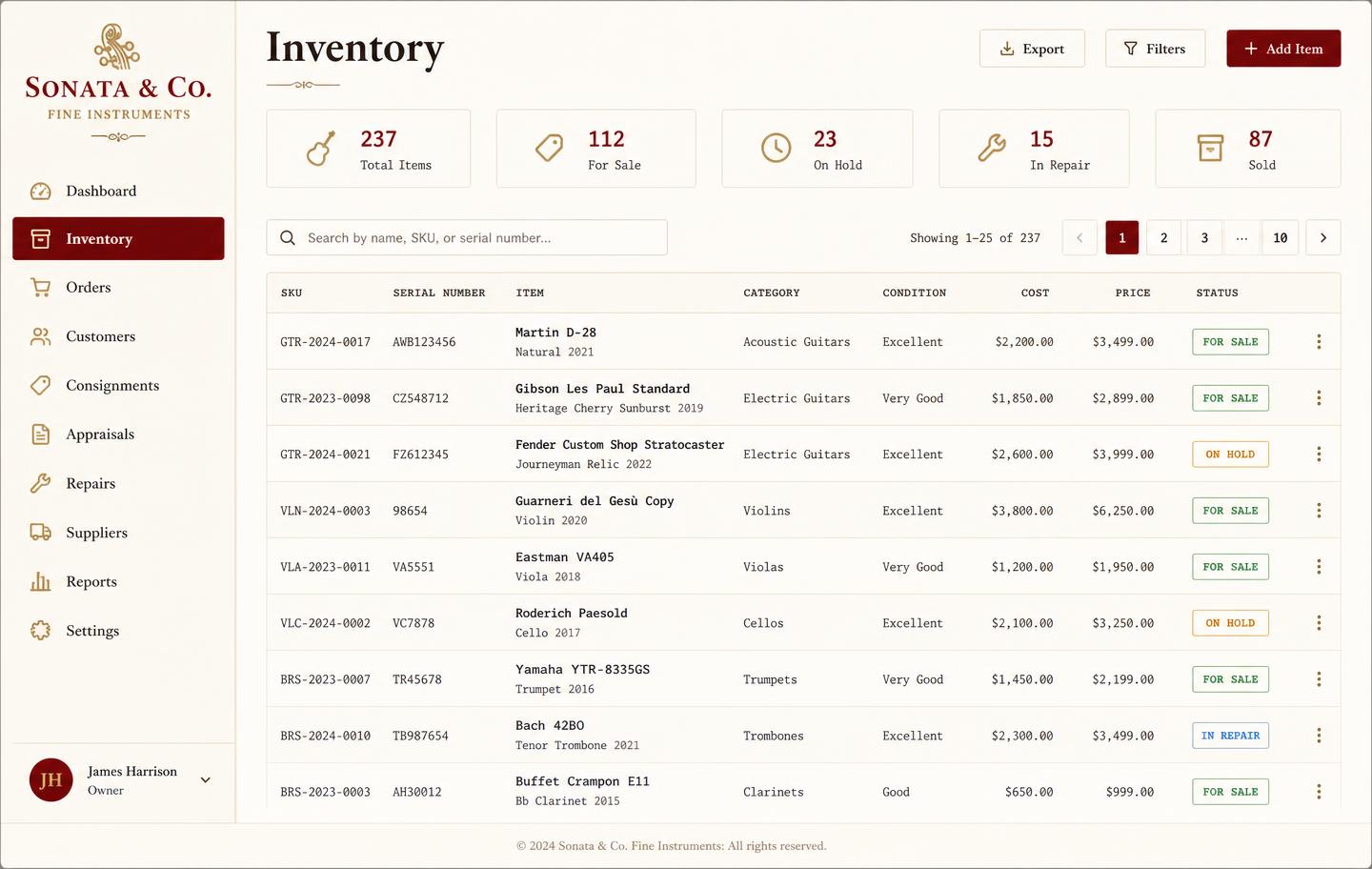
- One record per instrument with serial, provenance, and condition
- Owned, consigned, trade-in, and on-approval stock tracked separately
- True cost including acquisition, setup, and repair work
- Margin and days-on-hand per unit, not per category
- Client history so you know who buys what before you call them
Every instrument is a file, not a row
Serial number, year, finish, case, provenance notes, photographs, purchase source, and every repair it has been through stay on the unit card for its whole life in your shop — and are still there when a buyer asks two years later.
- Photos and condition notes attached to the unit
- Acquisition source and purchase price recorded
- Full service history before and after sale
Consignment kept honest
Consigned instruments never mix with owned stock in your valuation. Each carries the owner, the agreed split or floor price, the term, and whether the payout has been made.
- Owner contact and agreement terms per unit
- Split, floor price, and payout status
- Return-by dates so nothing sits forgotten
The real margin, after setup
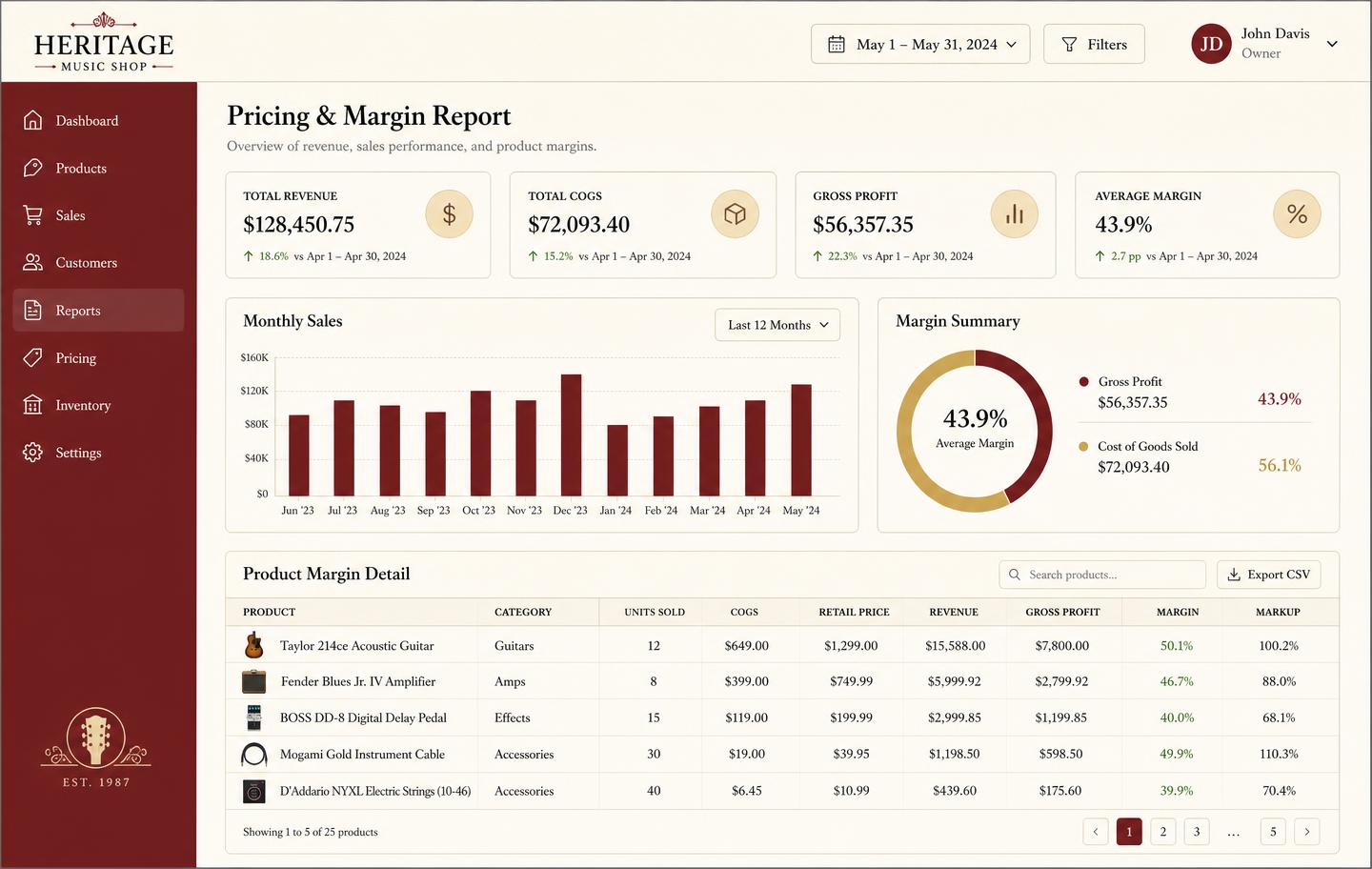
An instrument's true cost includes the frets, the setup hours, and the case you threw in. Music Shop Suite adds those to the unit before it reports margin, so your best-selling line is not secretly your worst-earning one.
Know your buyers
Client records carry purchase history, wish lists, instruments serviced, and rentals. When a collectible arrives, the right three phone calls are obvious instead of guesswork.
- Purchase and enquiry history per client
- Wanted lists matched against incoming stock
- Notes and preferred contact on the client card
Aged stock you can actually see
Days on hand per unit, sorted worst first, tells you which capital is sitting still. Dealers who look at that list monthly carry less dead stock and better cash flow.
Alongside your till, not instead of it
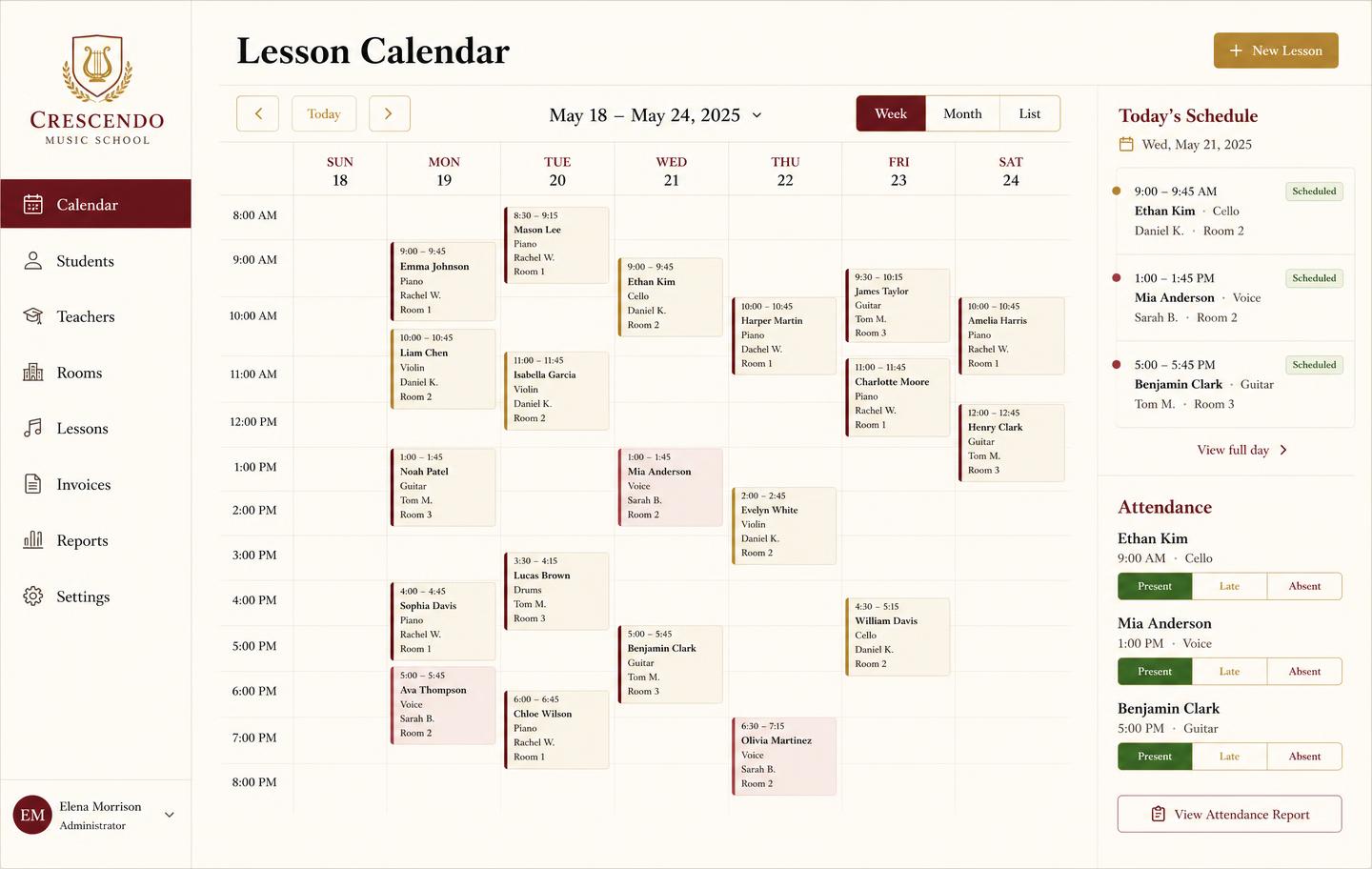
Keep your existing card terminal. Music Shop Suite is the back office behind it: stock, clients, rentals, the repair bench, lessons, and the books.
See the workbench before you sign up
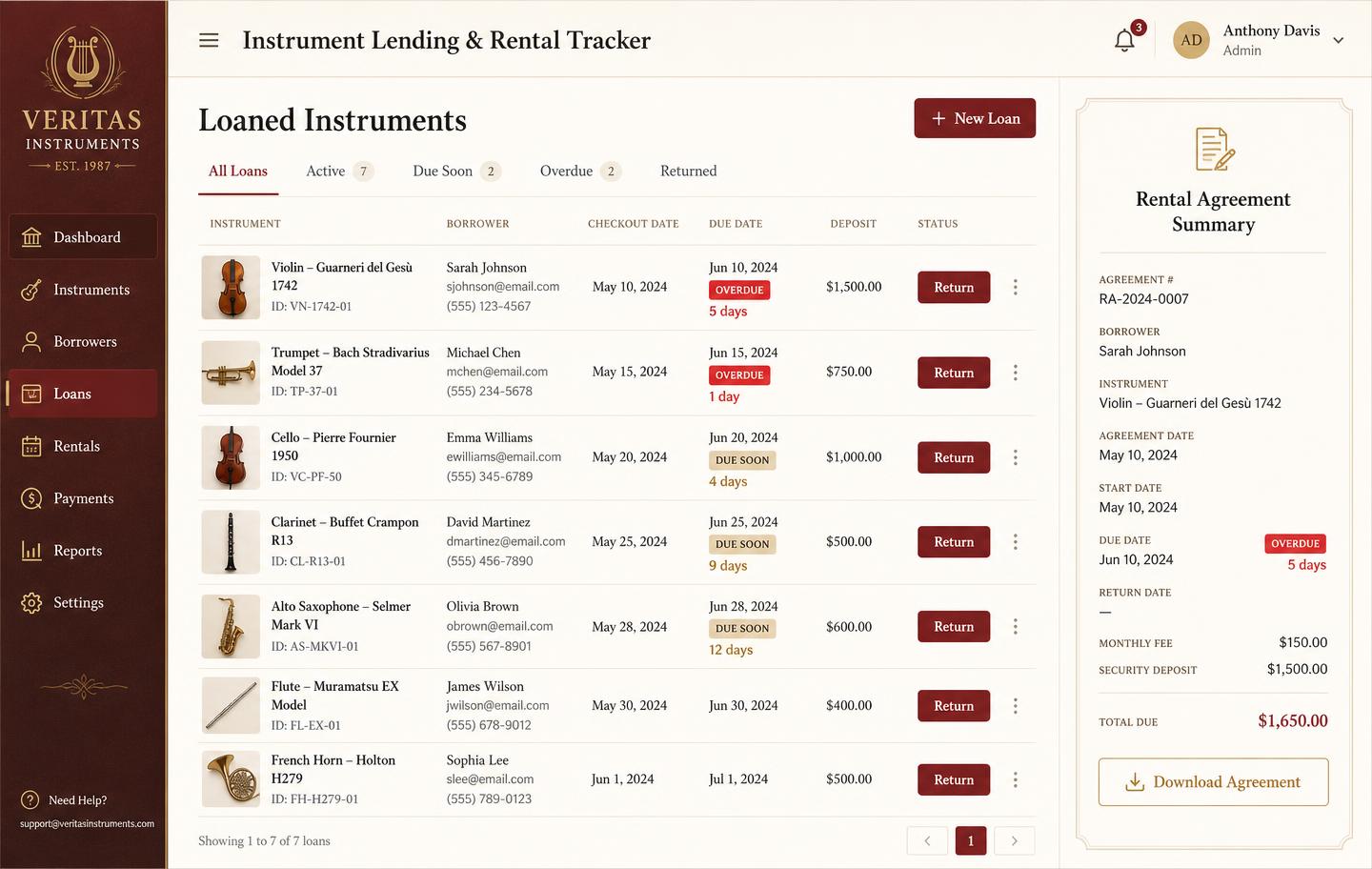
Inventory, pricing, lesson bookings, and instrument lending all live in the same back-office dashboard — no separate apps, no re-keying between them.
Honest note
Not a full POS terminal
We do not process card-present transactions or run a cash drawer. Music Shop Suite is a back-office operating system for dealers — inventory, clients, consignment, rentals, repairs, lessons, and accounting — designed to sit behind whatever payment hardware you already trust.
Frequently asked
- What is musical instrument dealer software?
- It is back-office software built around serialised, high-value stock: each instrument is a unique unit with its own cost, provenance, condition, repair history, consignment terms, and sale price — not an anonymous line in a quantity column.
- Does it handle consignment stock?
- Yes. Consigned instruments are tracked separately from owned stock, with the owner, agreed split, payout status, and return date on the unit record.
- Is this a POS terminal?
- No. Music Shop Suite is a back-office operating system for dealers — inventory, clients, rentals, repairs, lessons, and accounting. It is not a card-present till, and it works alongside whatever payment terminal you already use.
- What does it cost?
- $49 a month for the whole dealership, with no per-user pricing and no trial tier.
Keep exploring the workbench
Every part of the shop lives in one system. Follow the workflow closest to what you are trying to fix first.
- Best music store POS softwareHonest comparison of tills vs the back office.
- Instrument lending libraryBorrowers, due dates, deposits, and condition on return.
- Work order managementIntake photos, quotes, approvals, parts, and bench queues.
- Warranty managementCoverage by serial, supplier claims, and expiry alerts.
- Used gear appraisalCondition grades, offers, refurb cost, realised margin.
- Pricing — $49/monthOne plan, every module, no per-seat surprises.
Sign up today
Run your shop on one workbench — starting today.
$49/month, no contracts, no trial. Import your spreadsheet, invite your team, and have inventory, repairs, rentals, and lessons in one place tonight.