Consignment management software
Consignment Management Software for Music Shops
Consignment is the easiest part of a music shop to lose money on. A guitar sits on the wall for eight months, the split was agreed verbally, and nobody remembers what the seller is owed. Music Shop Suite gives every consigned item an owner, an agreed split, an age, and a payout balance you can prove.
- One record per consigned item with owner, split, and agreed floor price
- Payout balances calculated the moment an item sells
- Days-on-floor aging so stale stock gets dealt with
- Consignor statements you can email or print
- Consigned stock kept separate from owned stock in your valuation
Know exactly what you owe, and to whom
The dangerous number in consignment is the one you never total up. The Suite keeps a running payout liability across every consignor so month-end is a report, not an archaeology dig.
- Percentage or fixed-payout splits per item
- Running balance owed per consignor
- Payout history with dates and amounts
Stop consigned gear from ageing on the wall
Floor space is your scarcest asset. Aging views surface the pieces that have been hanging longest so you can drop the price, renegotiate the split, or hand it back.
- Days-on-floor per item and per consignor
- Flag items past your agreed consignment term
- Return-to-owner status without deleting the history
Consigned stock is not your stock
Mixing consigned instruments into your owned inventory inflates your stock value and misleads your accountant. The Suite tracks them separately while keeping them visible on the same floor list.
- Owned vs consigned split in inventory valuation
- Margin reporting that only counts your real share
- Full item history if it later gets bought outright
One customer record, every relationship
Consignors are usually customers, students, or repair clients too. Keeping them on one record means you can see the whole relationship, not one slice of it.
- Purchases, repairs, rentals, and lessons on the same person
- Contact details and agreement notes in one place
- Notes and photos from intake retained for disputes
See the workbench before you sign up
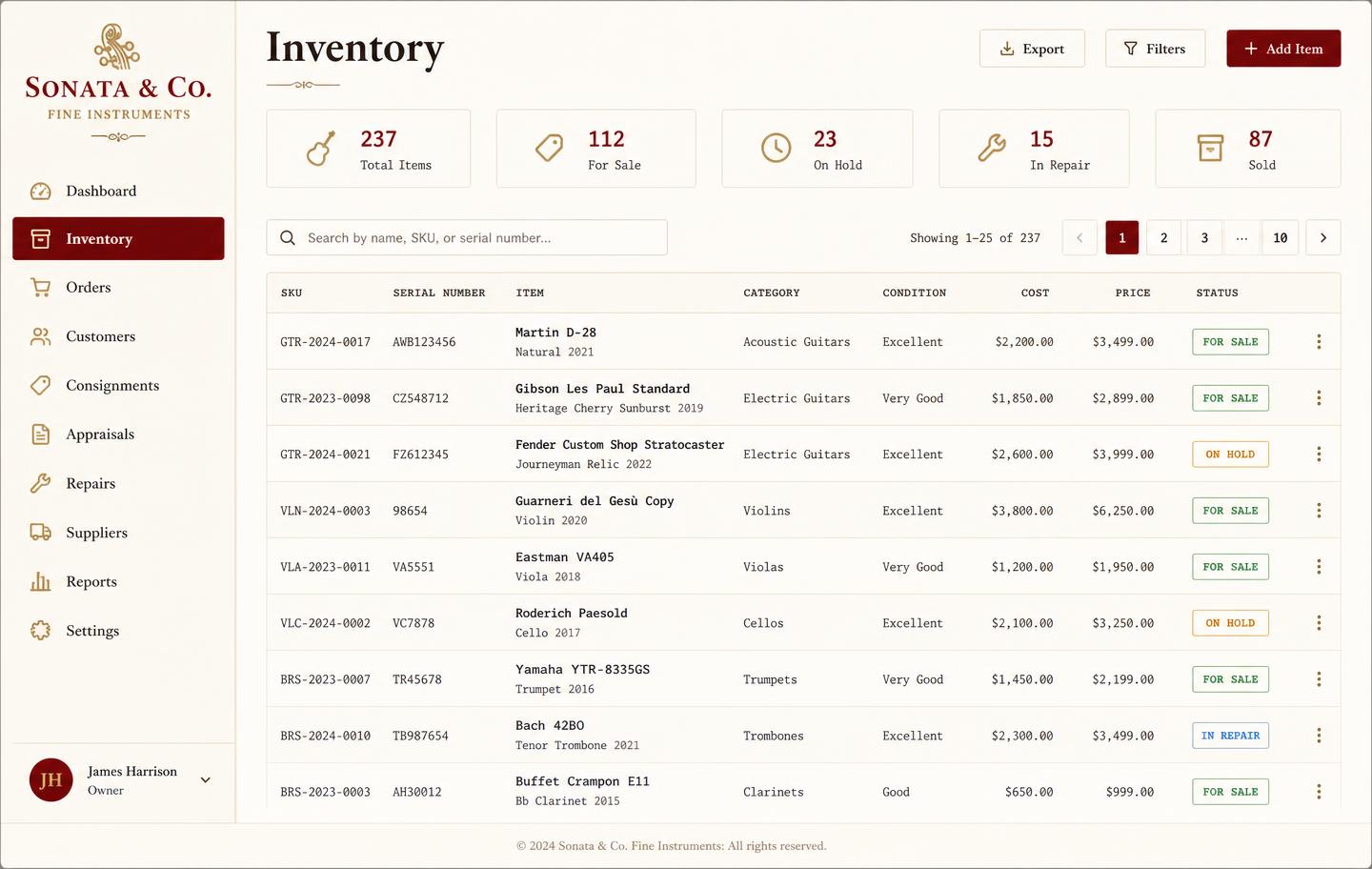
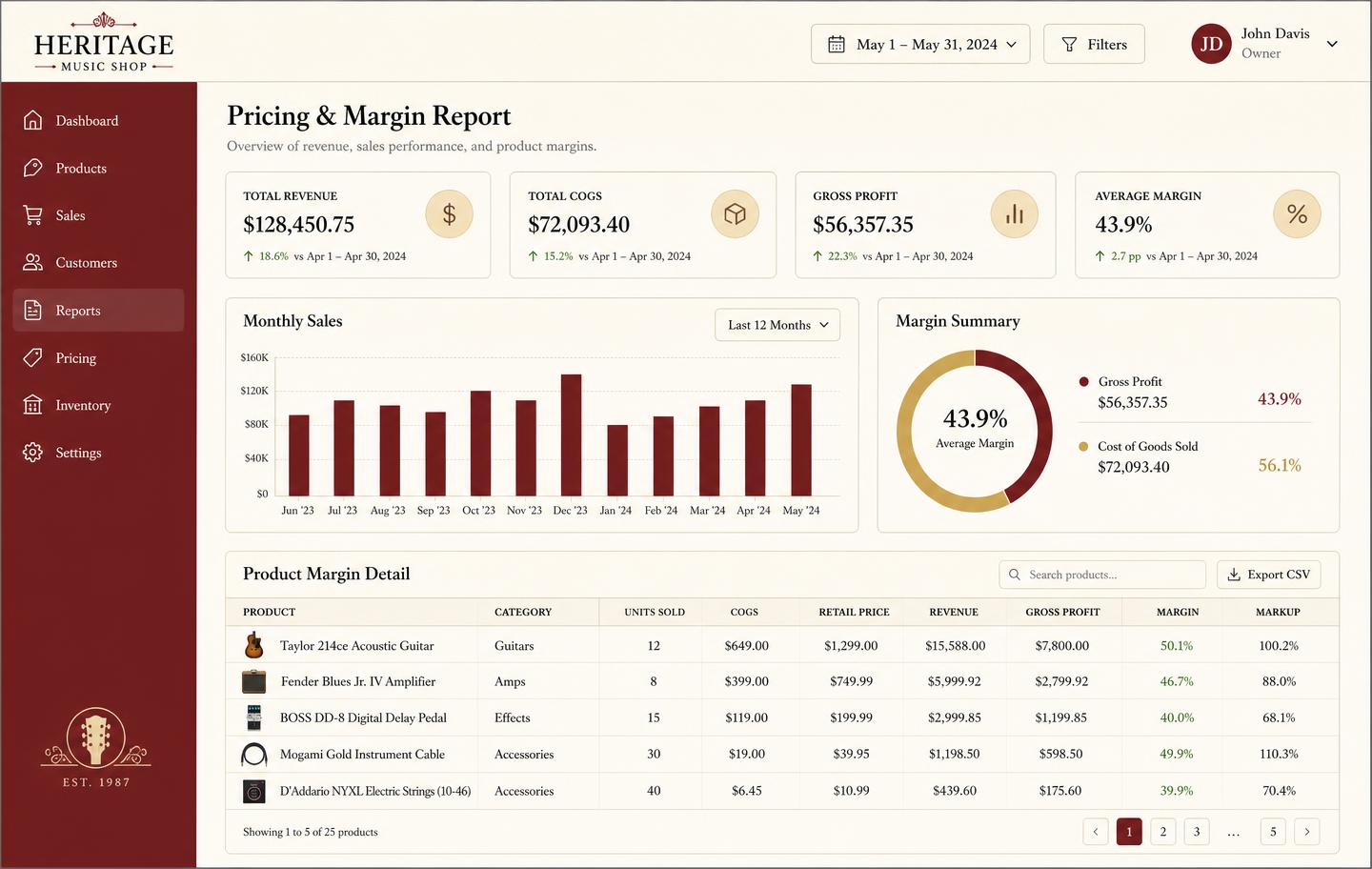
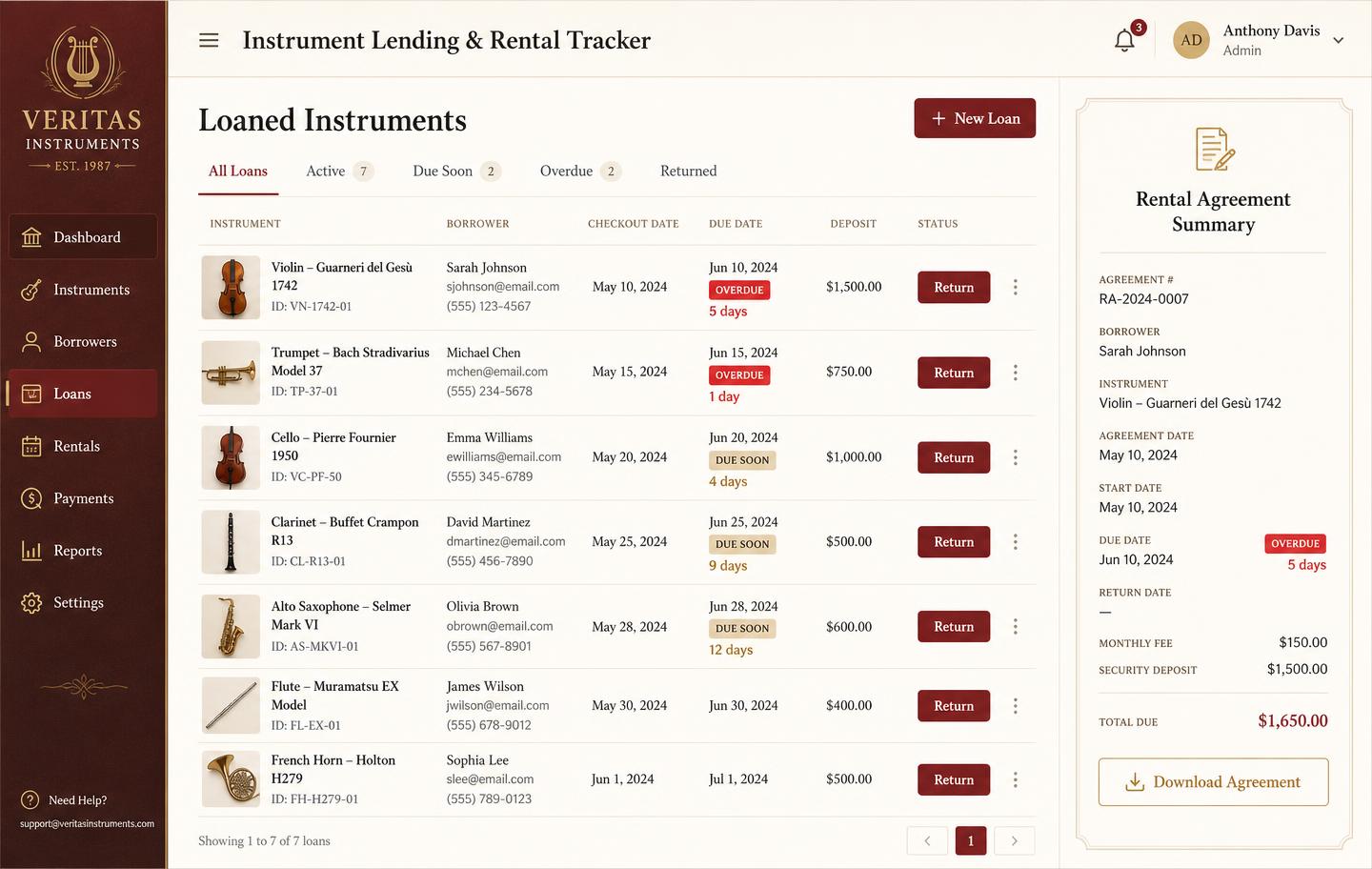
Inventory, pricing, lesson bookings, and instrument lending all live in the same back-office dashboard — no separate apps, no re-keying between them.
Honest note
Back office, not a till
Music Shop Suite does not replace your card reader. It replaces the spreadsheet where your consignment ledger currently lives.
Frequently asked
- How are consignor splits calculated?
- You set a percentage or a fixed seller payout per item. When the instrument sells, the Suite records the shop's share and the consignor's balance owed automatically.
- Can I see how long consigned gear has been on the floor?
- Yes. Every consigned item shows days-on-floor so you can renegotiate, discount, or return stale stock before it eats your display space.
- Do consignors get a record of their items?
- Each consignor has a record listing their items, agreed splits, sale dates, and payouts, so you can answer 'has my banjo sold?' in seconds.
- Is this a POS terminal?
- No. Music Shop Suite is a back-office system. Keep your card reader; the Suite runs the consignment ledger, stock, repairs, rentals, and lessons around it.
Keep exploring the workbench
Every part of the shop lives in one system. Follow the workflow closest to what you are trying to fix first.
- Best music store POS softwareHonest comparison of tills vs the back office.
- Asset trackingHolders, condition, value, and audit trail.
- Lesson schedulingRecurring terms, attendance, and billing that agrees.
- POS vs back officeWhat a retail till misses, and how to fill it.
- Vintage guitar inventoryProvenance, originality notes, and true margin.
- Pricing — $49/monthOne plan, every module, no per-seat surprises.
Sign up today
Run your shop on one workbench — starting today.
$49/month, no contracts, no trial. Import your spreadsheet, invite your team, and have inventory, repairs, rentals, and lessons in one place tonight.